
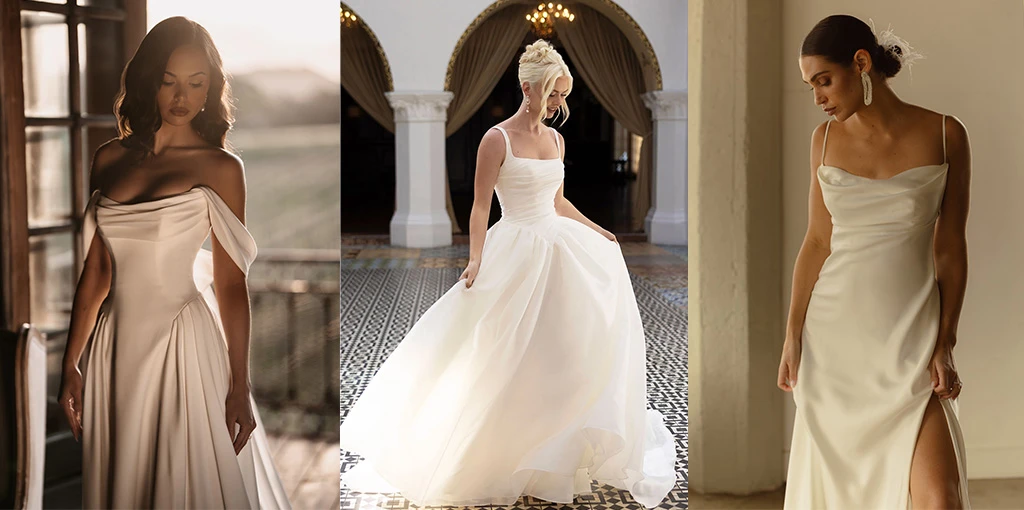
Simple doesn’t have to mean expected. In fact, some of the most memorable bridal looks are the ones where every line, fabric and detail feels completely intentional.
A simple wedding dress uses clean lines, thoughtful construction and carefully chosen details to create an elegant bridal look without excessive embellishment. A minimalist wedding dress takes a similar less-is-more approach, allowing beautiful fabric, silhouette, tailoring and purposeful design elements to make the statement.
That could mean a fluid crepe sheath with barely a detail in sight. It could also mean a sweeping Mikado ballgown with an architectural basque waist, an asymmetric neckline or one exquisite bow. Minimalism is less about following rules and more about what knowing which details deserve the attention.
If you’re drawn to timeless bridal fashion but still want your gown to feel distinctly you, this guide covers everything you need to know about simple wedding dresses and minimalist wedding dresses – from fabrics and silhouettes to styling, venues and the details redefining modern minimalism.
What Is a Simple Wedding Dress?
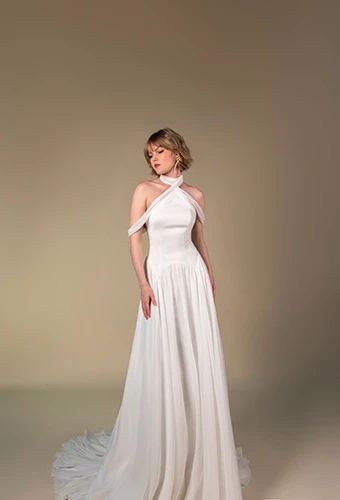
A simple wedding dress typically has a clean overall design with restrained embellishment. Instead of relying on layers of beading, intricate appliqués or all-over sparkle, the gown may create visual interest through beautiful fabric, precise seams, artful draping or a striking silhouette.
Simple wedding gowns may feature:
- Sleek, uninterrupted lines
- Minimal or no beading
- Luxe crepe, satin, silk or Mikado
- Sculptural necklines
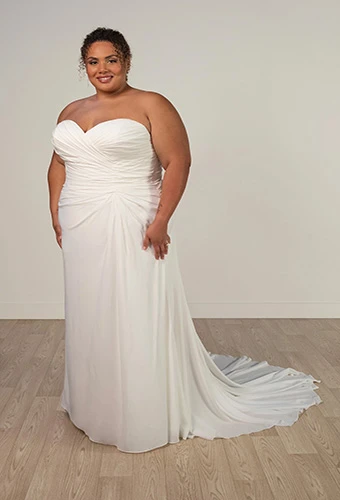
- Draped or ruched bodices
- Fabric-covered buttons
- Statement trains
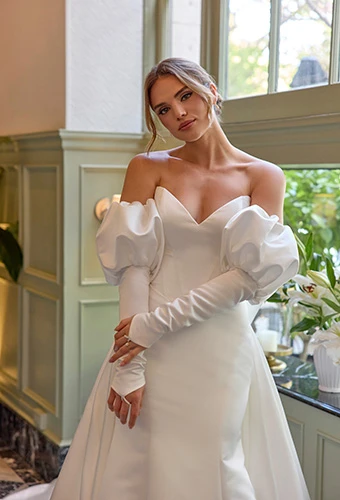
- Bows or detachable elements
- Clean A-line, sheath, column or ballgown silhouettes
Most importantly, simple does not mean plain.
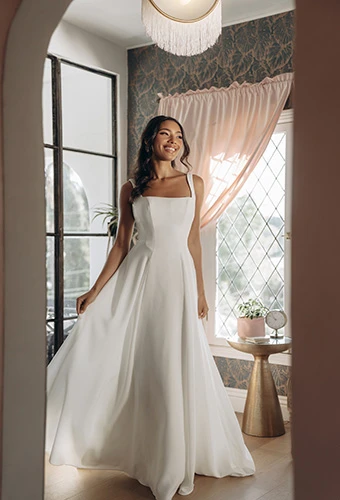
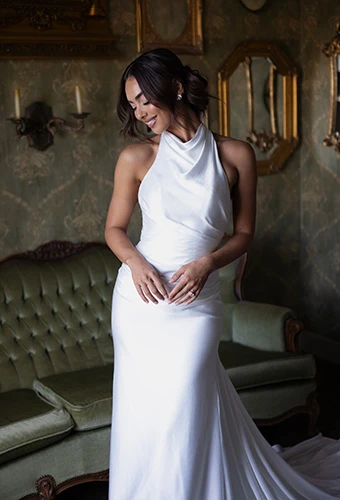
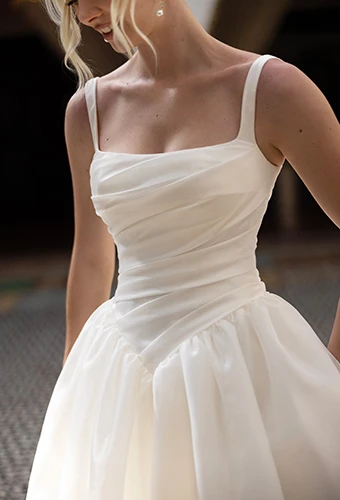
What Is a Minimalist Wedding Dress?
A minimalist wedding dress embraces intentionality. Each element, from the neckline and proportions to the fabric and finishing details, has a reason to be there.
Some minimalist wedding gowns are completely unembellished. Others incorporate lace, draping, corsetry or a dramatic design feature while maintaining a clean overall composition.
This means minimalist bridal style can feel:
- Modern and architectural
- Soft and romantic
- Sleek and sophisticated
- Classic and timeless
- Relaxed and effortless
- Fashion-forward and unexpected
The beauty of minimalism is that it gives each element more room to make an impact.
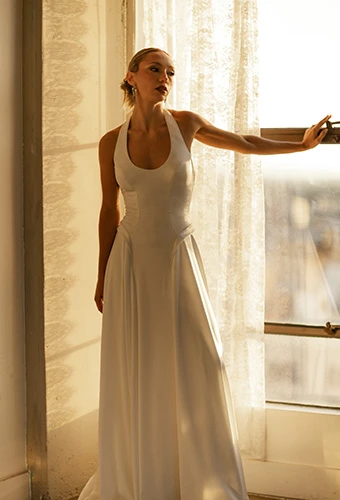
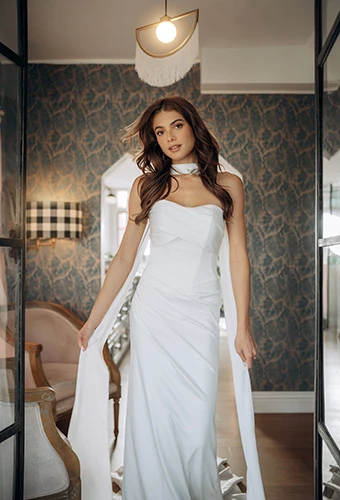
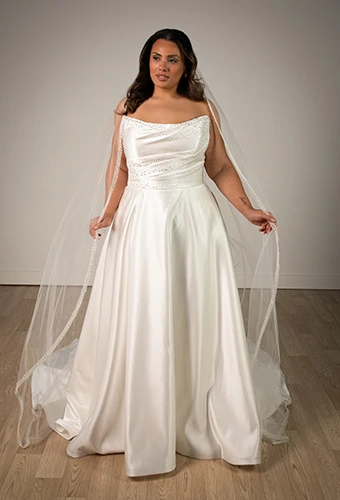
Simple vs. Minimalist Wedding Dresses: What’s the Difference?
The terms overlap, but they aren’t necessarily interchangeable.
A simple wedding dress is the broader category. It usually describes a gown with a relatively restrained visual design, limited embellishment or clean styling.
A minimalist wedding dress reflects a design philosophy. Rather than simply removing decoration, minimalism places greater emphasis on shape, proportion, tailoring, fabrication and a few carefully considered details.
Think of it this way:
- A sleek crepe gown can be both simple and minimalist
- A clean Mikado ballgown with an oversized bow can be simple but statement-making
- A streamlined gown with small areas of lace can feel simple and romantic
- A sculptural silk dress with dramatic draping can be minimalist without feeling understated
Many minimalist wedding dresses are simple, but there is no single formula a gown needs to follow.
That freedom is exactly what makes the look so personal.
Is a Simple Wedding Dress the Same as a Casual Wedding Dress?
Not necessarily.
A simple wedding dress can be every bit as formal as an intricately embellished gown. “Simple” describes the design aesthetic. “Casual” generally refers more to the overall level of formality, fabrication and styling.
A clean satin ballgown with a sweeping train could look stunning at a black-tie celebration. Meanwhile, a soft chiffon gown with relaxed construction may have a more casual feeling if it includes romantic detailing.
When wedding dress shopping, think about how you want to feel. Polished? Relaxed? Romantic? Architectural? Dramatic? Those answers can be more useful than trying to fit your style into a single label.
Best Fabrics for Simple and Minimalist Wedding Dresses
When embellishment is restrained, fabric gets its own bridal moment.
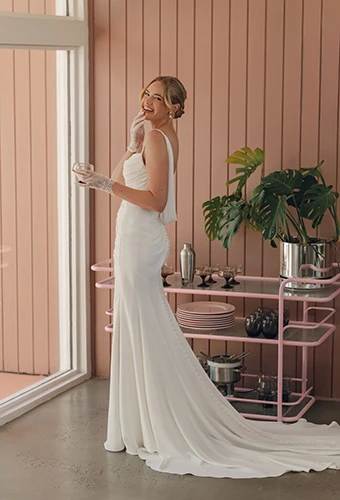
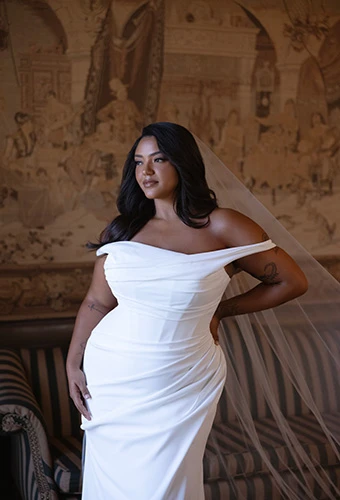
Crepe Wedding Dresses
Crepe has a smooth, typically matte finish that works beautifully with clean tailoring. Its fluid quality makes it especially striking on sheath, column, fit-and-flare and softer A-line silhouettes.
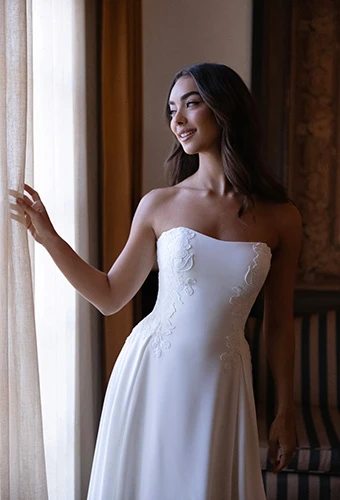
Satin and Silk Wedding Dresses
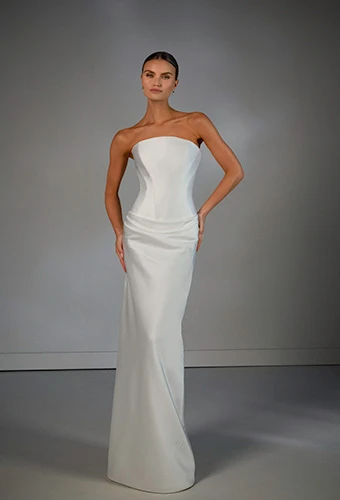
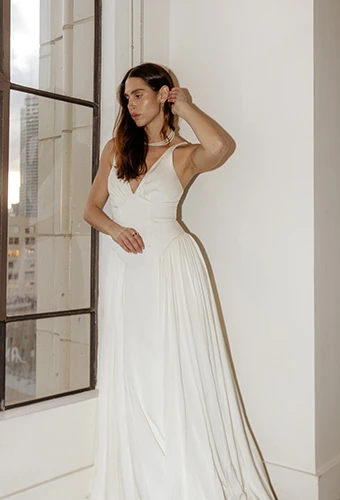
Satin and silk bring luminosity and movement to a minimalist wedding dress. They can look fluid and effortless on a column silhouette or structured and dramatic when used in a gown with more volume.
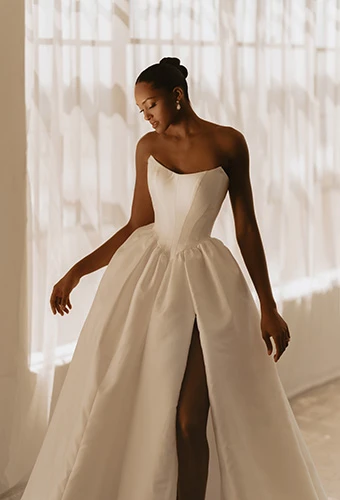
Mikado Wedding Dresses
For a simple wedding gown with structure, Mikado is a gorgeous choice. Its substantial hand helps define sculptural bodices, A-line skirts and dramatic ballgowns while maintaining a polished surface.
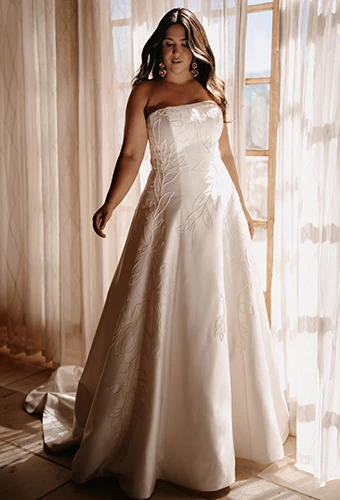
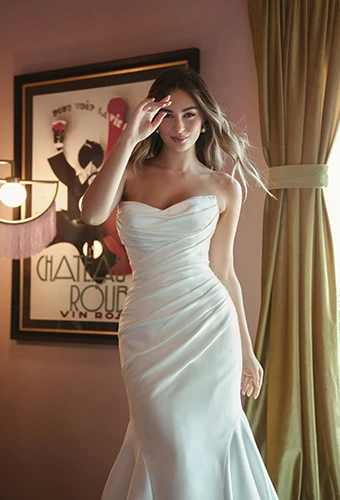
Chiffon Wedding Dresses
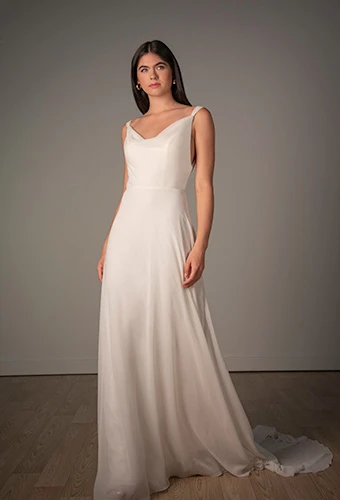
Lightweight chiffon brings movement and softness to simple bridal style. It can be especially appealing for destination celebrations, outdoor weddings or brides who want their gown to move naturally throughout the day.
Can a Minimalist Wedding Dress Have Lace or Tulle?
Absolutely.
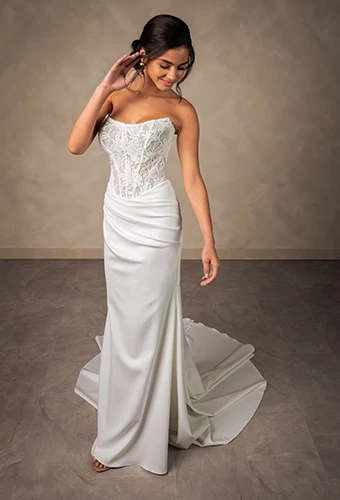
Minimalism doesn’t require eliminating romantic fabrics. Lace or tulle can still feel beautifully restrained when it is used with intention – for example, as a sheer panel, delicate trim or textural accent rather than an all-over focal point.
Simple Wedding Dress Silhouettes
One of the best things about minimalist bridal fashion? Minimalism is not a silhouette. The aesthetic can work across nearly every wedding dress shape.
Simple wedding gown styles range from fluid sheath and column dresses to structured A-lines and dramatic ballgowns, proving that a clean aesthetic can work across every silhouette.
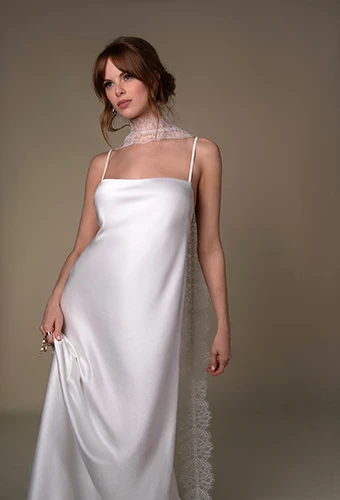
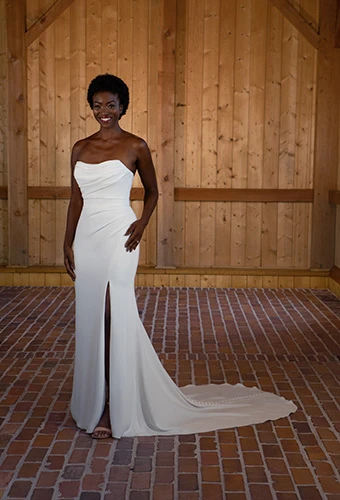
Simple Sheath and Column Wedding Dresses
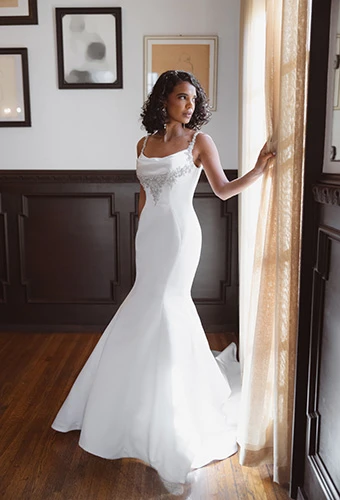
A sheath or column gown lets clean lines take center stage. Crepe and silk are particularly beautiful here, following the natural line of the body without requiring additional embellishment. These silhouettes also make an excellent canvas for an interesting neckline, low back or draped bodice.
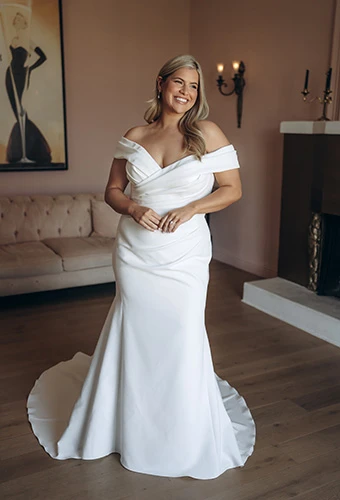
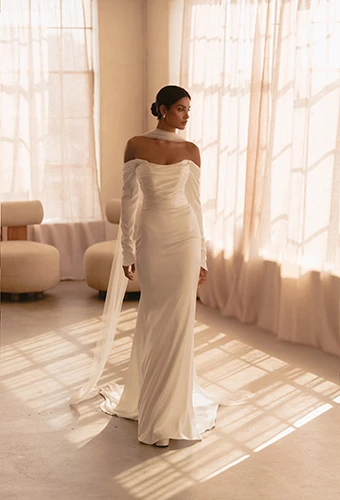
Simple Fit-and-Flare Wedding Dresses
If you love a more sculpted shape, a clean fit-and-flare gown can create drama through tailoring alone. Contour seams, structured fabric and an elongated train can provide all the visual interest the design needs.
Simple A-Line Wedding Dresses
A-lines offer incredible versatility. Choose soft crepe for fluidity, satin for luminous movement or a structured fabric for a more architectural effect.
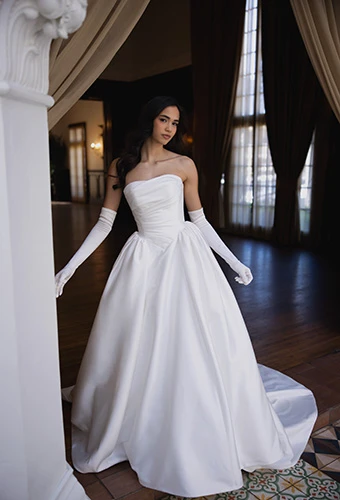
Simple Ballgown Wedding Dresses
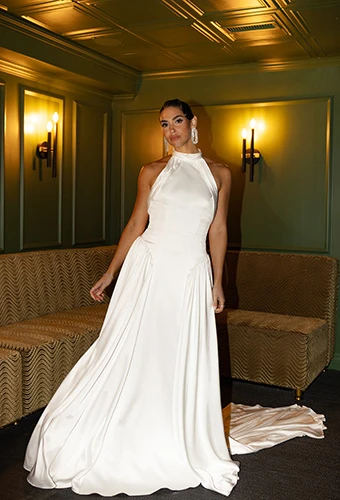
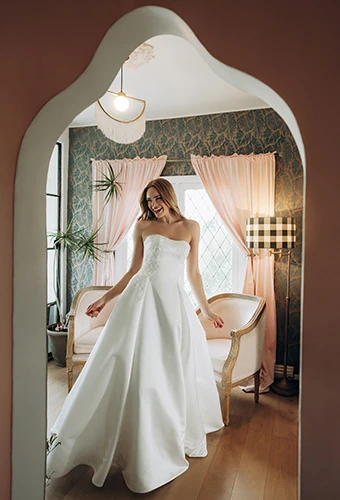
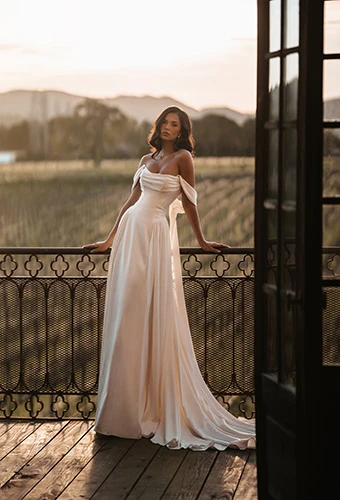
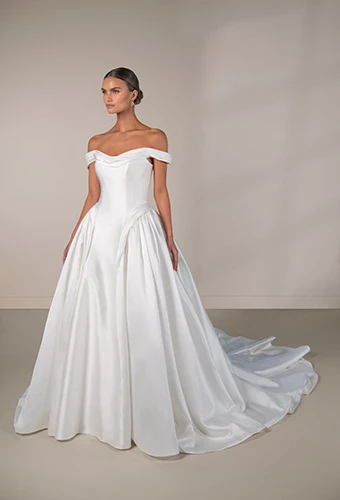
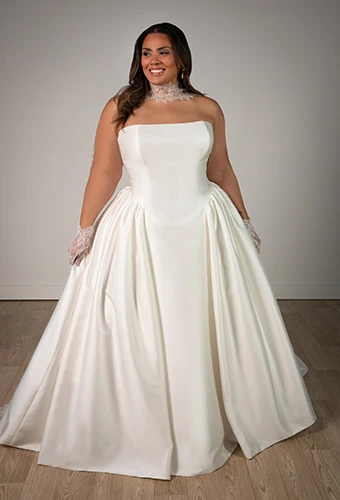
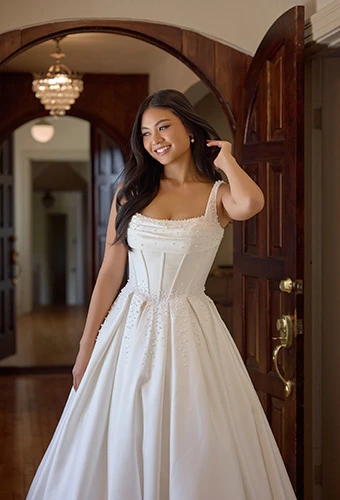
Minimal does not have to mean minimal volume. A simple ballgown lets silhouette become the statement. Structured satin or Mikado, sculptural pleating and an intentional waistline can create remarkable presence without relying on ornate decoration.
For brides who want clean design and a sweeping entrance, this combination offers both.
Can a Minimalist Wedding Dress Still Make a Statement?
Absolutely – and this is where modern minimalism gets interesting.
Instead of layering detail upon detail, many contemporary minimalist wedding dresses concentrate the visual impact into one or two elements.
Look for:
- Dropped or basque waists
- Asymmetric draping
- Sculptural bows
- Unexpected necklines
- Exposed or internal corsetry
- Dramatic low backs
- Oversized trains
- One-shoulder silhouettes
- Precision pleating
- Detachable sleeves or overskirts
Modern minimalism doesn’t remove personality. It gives personality more room to be noticed.
How to Choose a Simple Wedding Dress for Your Venue
Your venue doesn’t dictate your gown, but it can help shape the experience you want from it.
Black-Tie or Ballroom Wedding
Consider polished satin, silk or Mikado with a structured A-line or ballgown silhouette. A sweeping train, architectural neckline or dramatic veil can add formality while keeping the dress itself clean.
Garden or Outdoor Wedding
A softer A-line, fluid crepe or lightweight fabric can move beautifully outdoors. Think about practical details too: the length of your train, the terrain and how easily you want to move between ceremony, portraits and reception.
Beach or Destination Wedding
Lightweight chiffon, silk or fluid crepe can complement a beach or destination wedding without requiring your bridal look to feel casual. A streamlined silhouette and lighter train can also make movement easier.
City or Modern Wedding
Architectural shapes feel especially at home against modern surroundings. Consider an asymmetric neckline, sharp square neck, basque waist or sculptural column silhouette.
Courthouse or Intimate Wedding
There are no rules requiring an intimate wedding to mean a low-key bridal look. A streamlined full-length gown can feel beautifully intentional, while a shorter silhouette offers another fashion-forward direction.
Finding a Minimalist Wedding Dress That Feels Like You
There is no body type, wedding aesthetic or personality that “owns” minimalist bridal style. The goal is finding the combination of shape, structure and details that makes you feel confident.
Minimalist Wedding Dresses for Plus-Size Brides
Start with the features you love rather than a list of silhouettes someone says you “should” wear.
Consider the level of internal support you prefer, the way a fabric moves, your favorite necklines and the amount of structure that makes you feel most comfortable.
Essense of Australia and Stella York also offer selected gowns through the EveryBody/EveryBride program, with designs available in sizes 18 to 34/36. The program is designed to offer a broader selection of gowns thoughtfully constructed to flatter and embrace natural curves.
Minimalist Wedding Dresses for Petite Brides
Proportion and alterations can make a significant difference. Pay attention to where waistlines, necklines and seams hit your frame and ask your stylist which design elements can be adjusted during alterations.
A dramatic gown isn’t automatically off-limits either. An A-line or ballgown can feel beautifully balanced when the proportions work for you.
How Do You Accessorize a Simple Wedding Dress?
Think of your simple wedding dress as a canvas for personal styling. You can preserve its clean aesthetic or introduce contrast.
Choose a Veil With Intention
For visual continuity, pair an architectural gown with an unembellished cathedral or chapel veil.
For romantic contrast, add lace edging, appliqués or subtle dimension to a sleek dress.
If the gown already has a dramatic neckline, bow or back detail, a clean veil can let those features become the focus.
Match Jewelry to the Neckline
A minimalist gown does not have to equal minimalist jewelry.
A strapless neckline can leave room for a statement necklace. A high neckline may pair beautifully with sculptural earrings instead. Square and asymmetric necklines often look strongest when jewelry supports rather than competes with their shape.
Let Your Hairstyle Shift the Mood
A sleek bun emphasizes architectural construction, while polished waves soften structured satin. Natural texture can give a simple gown an effortless feel, and a modern ponytail offers a fresh counterpoint to a classic silhouette.
Use Accessories to Create a Second Look
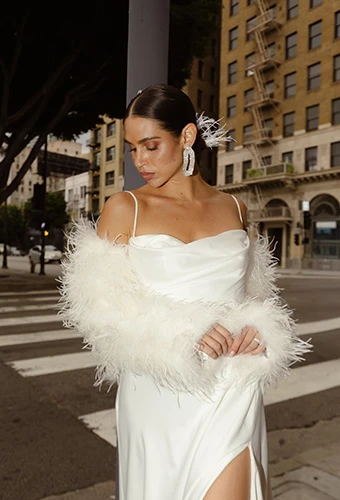
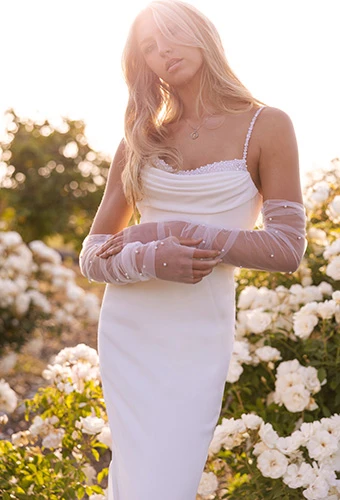
Gloves, detachable sleeves, an overskirt or a change of shoes can shift the mood without requiring an entirely different dress.
Choose what feels expressive to you. A minimalist wedding dress is not an invitation to make yourself smaller, it is an opportunity to decide exactly where you want the attention to go.
What to Look for When Trying on Simple Wedding Dresses
Because there are fewer decorative elements competing for attention, fit and construction can become especially noticeable on a simple wedding gown.
When trying dresses on, pay attention to:
- How the fabric feels and moves
- Where seams sit on your body
- The structure and support of the bodice
- How the neckline looks from different angles
- Whether you feel comfortable sitting and walking
- The weight and length of the train
- How the back looks in photos
- Which alterations may be possible
- Whether you can imagine different accessory combinations
Most importantly, stay open-minded. Trying on different styles and silhouettes at your bridal appointment gives you information that scrolling online simply can’t.
Find a Simple Wedding Dress That Feels Entirely Your Own
Simple isn’t synonymous with plain, and minimalist doesn’t mean one-note.
The most compelling simple and minimalist wedding dresses make every element count. Maybe it’s the way the silk catches the light. Maybe it’s the precision of a square neckline, the curve of a basque waist, a sweeping train or a line of fabric-covered buttons disappearing toward the hem.
There is no single way to embrace minimalism, and that’s the point.
Explore simple and minimalist gowns from Essense of Australia, Stella York, Martina Liana, Martina Liana Luxe and All Who Wander. Save the designs that speak to your unique style and bring those ideas with you when it’s time for your bridal appointment.
Explore our simple wedding dress gallery and then find a bridal store near you to experience your favorite silhouettes, fabrics and details in person.
Minimalist and Simple Wedding Dress FAQs
A simple wedding dress generally uses clean lines, minimal embellishment and intentional details. Fabric, construction and silhouette often create the visual interest instead of heavy beading, sparkle or ornate lace.
A minimalist wedding dress emphasizes purposeful design, often through clean proportions, elevated fabrics, thoughtful tailoring and limited embellishment. Minimalist gowns can range from sleek crepe columns to structured satin ballgowns.
They overlap, but not always. “Simple wedding dress” is a broad style category, while “minimalist wedding dress” generally describes a design approach centered on intentional restraint. A simple dress can still include a dramatic bow or romantic detailing without following a strictly minimalist aesthetic.
Not necessarily. The price of a wedding gown can reflect fabric quality, construction, corsetry, tailoring and other craftsmanship in addition to embellishment.
Yes. Strategically placed lace, lace trim or a subtle lace panel can add softness while maintaining a clean overall aesthetic.
There is no single best fabric. Crepe creates fluid, clean lines. Satin and silk offer luminosity. Mikado provides structure and chiffon offers airy movement. Choose based on the silhouette, season and overall feeling you want.
Look for intentional details such as draping, a basque waist, statement neckline, bow, low back, dramatic train or detachable accessory. Veils, jewelry and hairstyles can also completely shift the final look.
Both minimalist and embellished veils can work. A clean veil maintains a streamlined look, while lace or dimensional details can create contrast. Consider your dress neckline, back and train before deciding.
Absolutely. Formality is influenced by fabric, silhouette, construction, train length and styling – not simply the amount of embellishment on a gown. A structured satin or Mikado minimalist gown can feel exceptionally formal.