
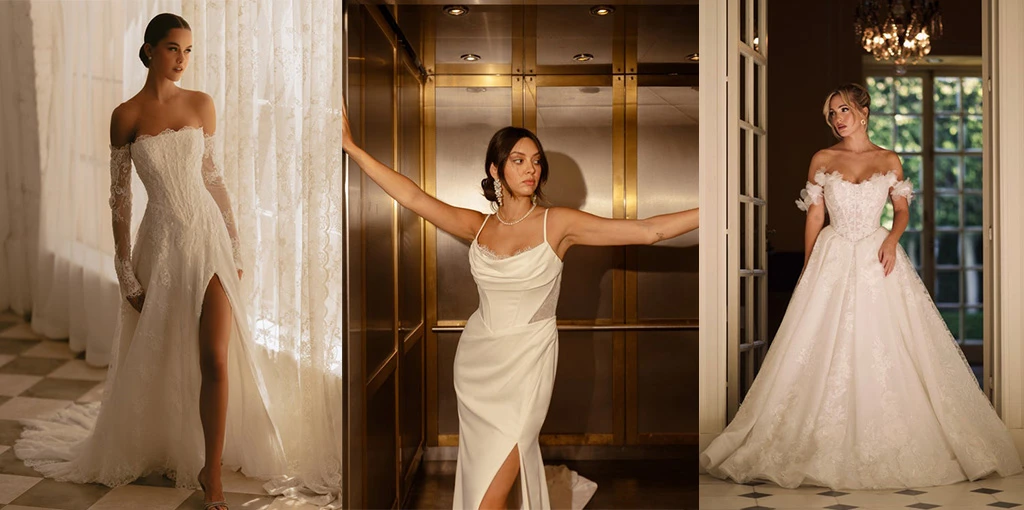
A-line, ballgown, trumpet, mermaid, sheath—wedding dress terminology can feel like an entirely new language. The good news? You do not need to become a bridal fashion expert before your first appointment.
A wedding dress silhouette is the overall shape a gown creates on the body. Wedding dress styles describe its aesthetic, expressed through fabric, construction and design details.
Understanding the difference can make browsing wedding dresses feel more intentional. It can also help you explain what you love to your bridal stylist, even when you have not settled on a specific gown.
This guide explores the most popular wedding dress styles and silhouettes, how they differ, and what to consider based on your comfort and unique style.
What’s the Difference Between a Wedding Dress Style and Silhouette?
A wedding dress silhouette describes the gown’s outline. It is shaped by elements such as the bodice, waist placement, skirt volume and point where the skirt begins to flare.
A wedding dress style describes the gown’s personality. Romantic, minimalist, glamorous, boho and vintage-inspired dresses can each appear in several silhouettes.
Think of the silhouette as the foundation and the style as your way of making it personal.
What Are the Most Popular Wedding Dress Silhouettes?
A-Line Wedding Dresses: Balanced and Effortless
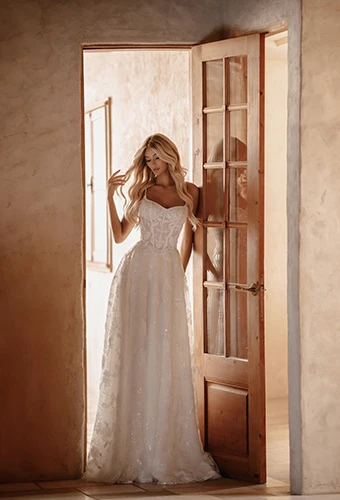
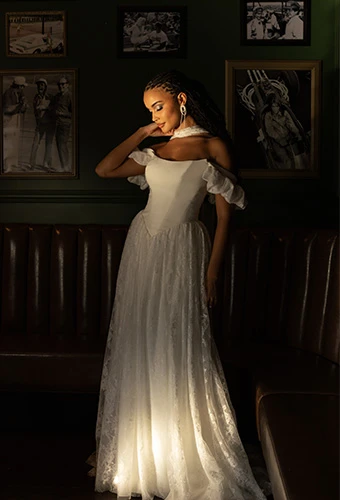
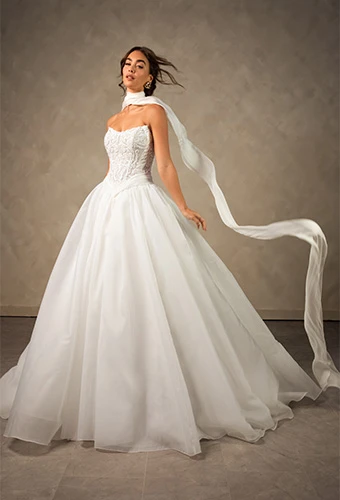
An A-line wedding dress is fitted through the bodice and opens gradually from the waist, creating a shape that resembles the letter “A”.
The silhouette is loved for its balance of structure and movement. Because the skirt expands gradually rather than dramatically, the silhouette offers definition through the bodice while still allowing space through the hips and legs.
A-line wedding dresses can also take on nearly any bridal style. Clean seams and luminous fabric create a refined, modern look. Floral appliqués add romance, while organic lace and airy layers introduce a more free-spirited feeling.
Ballgown Wedding Dresses: Refined Volume
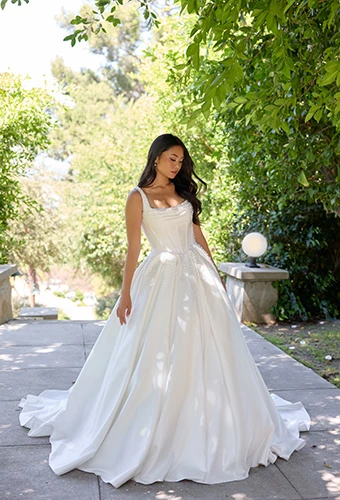
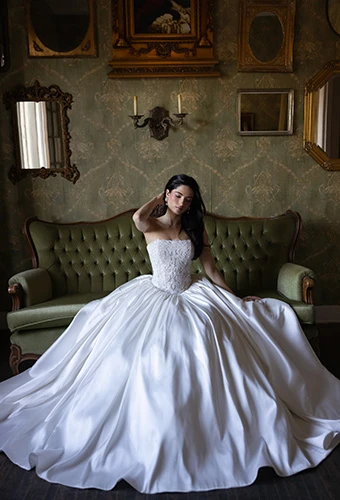
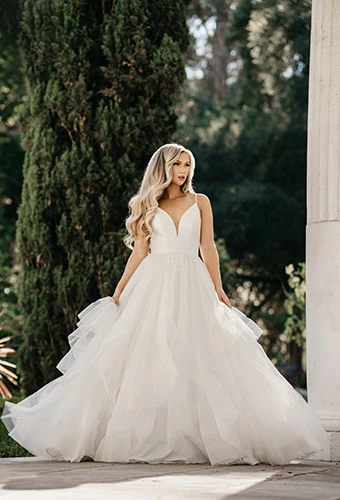
A ballgown wedding dress pairs a fitted bodice with a full skirt that begins at or near the natural waist. It creates one of bridal fashions most recognizable silhouettes.
The shape carries a sense of tradition, but fabric changes its entire mood. Satin and Mikado create defined, sculptural volume. Tulle feels softer and more weightless. Florals and intricate beading can add visual depth without changing the gown’s signature shape.
Modern ballgowns may feature exposed corsetry, square necklines, off-the-shoulder straps or clean strapless bodices. Others embrace a more romantic approach with layers of lace, delicate embellishment and sweeping trains.
What Is the Difference Between a Ballgown and a Princess Wedding Dress?
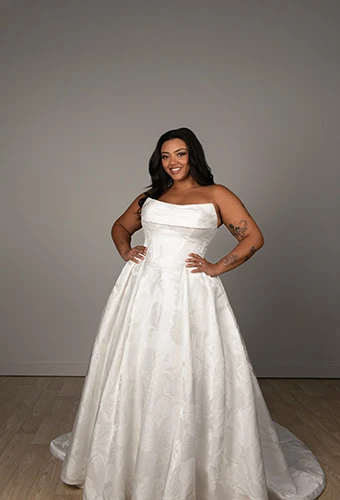
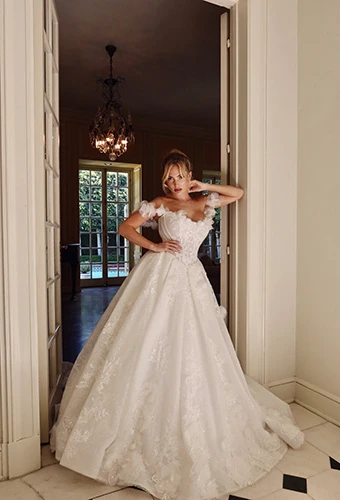
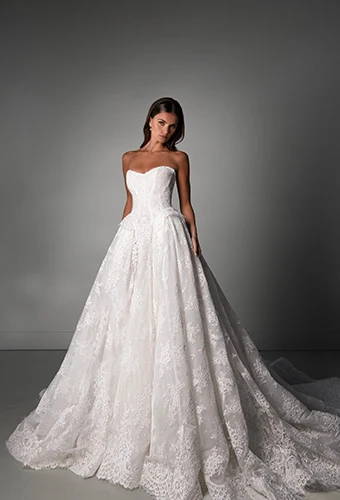
Ballgown and princess wedding dresses both feature fitted bodices and full skirts, but the amount of volume sets them apart.
A princess wedding dress is generally associated with an A-line silhouette, with a skirt that widens gradually from the waist. A ballgown creates a more pronounced transition at the waist and significantly greater fullness through the skirt.
Princess wedding dresses may also be crafted from lighter, less structured fabrics, creating a softer and more fluid shape.
Explore our complete guide to ballgown vs. princess wedding dresses for a closer look at the differences between these two silhouettes.
Fit-and-Flare Wedding Dresses: Definition with Movement
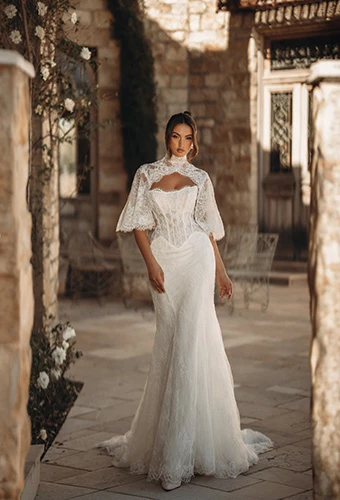
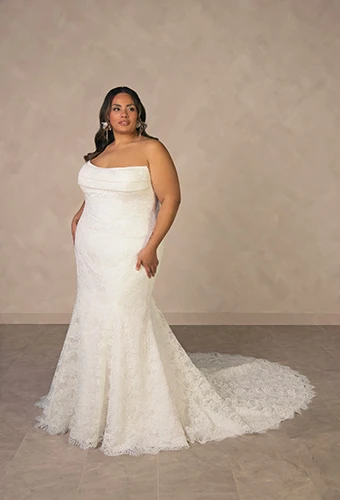
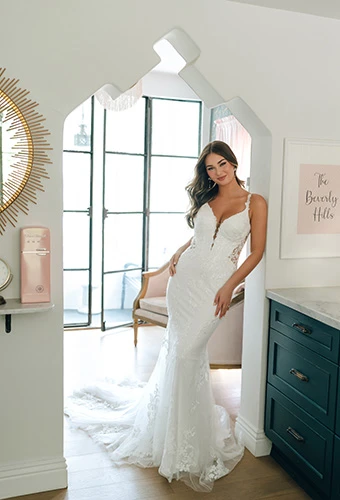
A fit-and-flare wedding dress is fitted through the bodice and hips before opening into a fuller skirt. The flare usually begins around the upper thigh, creating definition while providing greater movement through the lower half of the gown.
Fit-and-flare wedding dresses may feature sleek crepe, intricate lace, shimmering tulle or smooth satin. A structured corset can create a couture-inspired effect, while soft lace and layers bring a more romantic feeling to the same silhouette.
Because the skirt begins to open higher than it does on trumpet or mermaid gowns, the fit-and-flare silhouette creates a softer transition from the fitted bodice to the flowing skirt.
Trumpet Wedding Dresses: Sculpted with a Gradual Flare
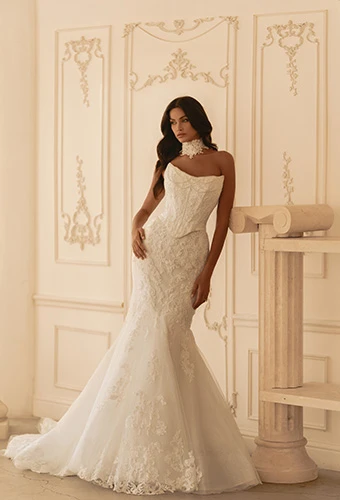
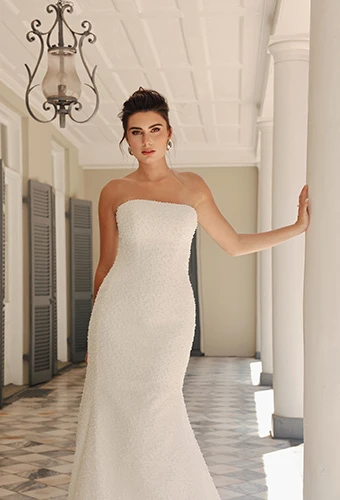
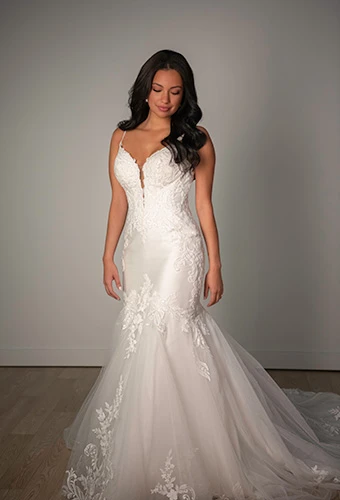
A trumpet wedding dress follows the body through the bodice, waist and hips before gradually widening around the mid-thigh. Its shape resembles the bell of a trumpet, creating a fitted look with a smooth, flowing transition into the skirt.
Trumpet silhouettes sit between fit-and-flare and mermaid wedding dresses. They remain fitted farther down the body than a traditional fit-and-flare, but the flare generally begins higher and opens more gradually than a mermaid gown.
The silhouette can feel soft and romantic in lace or tulle, sleek and modern in crepe or polished and architectural in satin. The flare may be subtle and fluid or more dramatic depending on the gown’s fabric, seams and skirt construction.
Mermaid Wedding Dresses: Sculpted and Dramatic
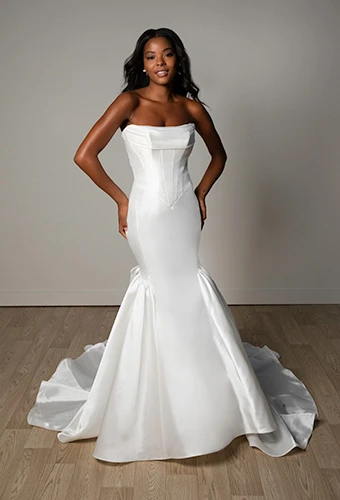
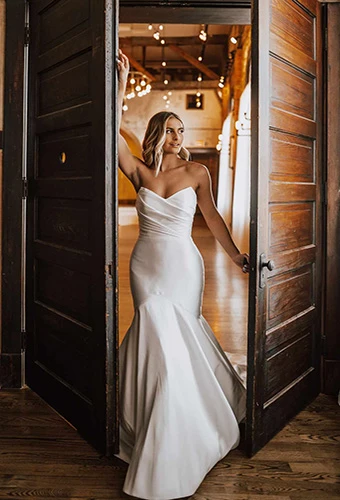
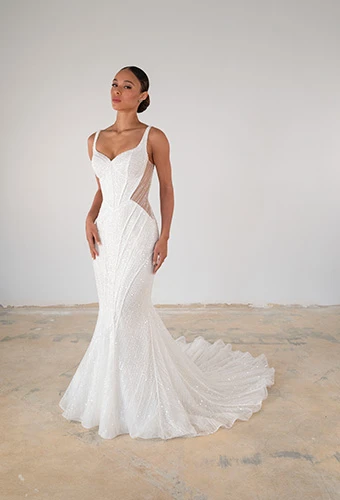
A mermaid wedding dress follows the body through the bodice, hips and thighs before flaring near or below the knee. The lower, more dramatic flare creates a strong contrast with the fitted upper portion of the gown.
The position and volume of the flare may vary. Some mermaid gowns open into a dramatic layered skirt, while others transition into a more understated sweep. Seam placement, corsetry and internal construction help create the gown’s sculpted shape.
This silhouette places attention on precise tailoring and the dramatic transition from fitted bodice to fuller skirt.
Sheath and Column Wedding Dresses: Clean and Streamlined
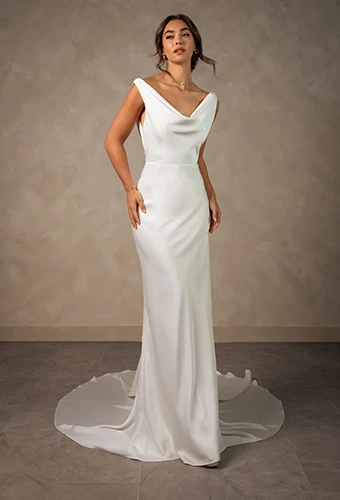
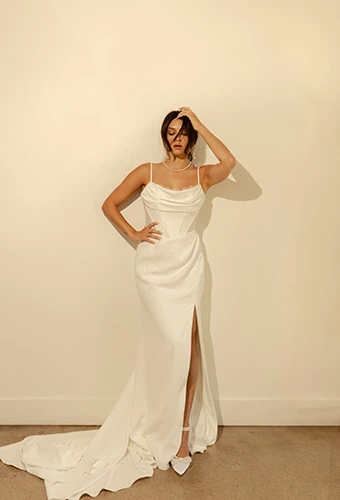
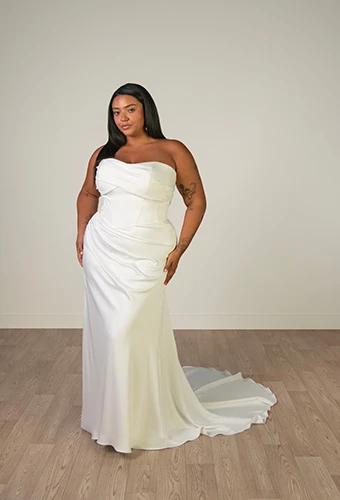
Sheath and column wedding dresses create a long, uninterrupted line from neckline to hem. While the terms are used interchangeably, sheath gowns closely skim the body’s curves, whereas column gowns drop in a straighter, more structured line.
Because the narrow skirts draw focus upward, details like draping, cutouts, open backs, necklines , and sleeves take center stage. An architectural column gown feels refined and structural, while a lace sheath with flowing sleeves leans bohemian.
These silhouettes demonstrate how a simple outline can become highly individual through fabric and construction.
Drop-Waist Wedding Dresses: Elongated and Fashion-Led
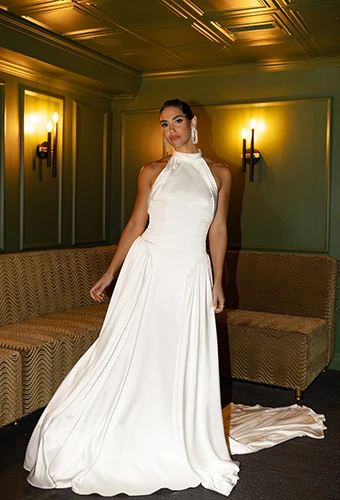
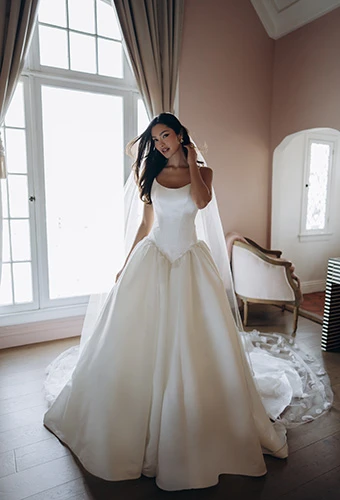
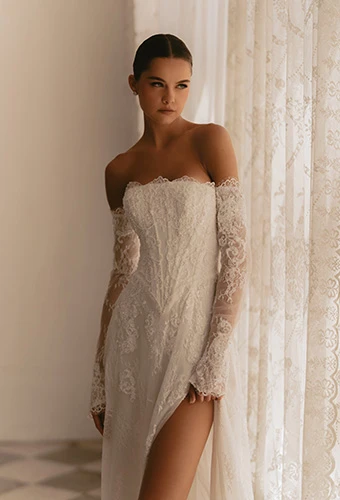
A drop-waist wedding dress features a bodice that extends below the natural waist before meeting the skirt. The lowered waistline creates an elongated transition through the torso and draws attention to the gown’s construction.
Drop waists can appear on fitted gowns, softly flowing A-lines or full ballgowns. The length and shape of the bodice can vary. Some drop-waist gowns create a smooth, understated transition into the skirt, while others use visible seams or corset details to emphasize the extended silhouette.
Some designs also incorporate removable overskirts, offering a second look with added volume while maintaining the elongated waistline underneath.
How Do You Choose a Wedding Dress Silhouette?
There is no single silhouette that every bride should wear. Instead of beginning with rules about body shape, consider the visual effect and experience you want your dress to create.
Ask yourself:
- Do I want a softly flowing skirt or a sculpted shape?
- How much structure and support would make me feel comfortable?
- Do I want the waist to feel defined, elongated or understated?
- Will I be walking outdoors, climbing stairs or dancing for hours?
- Which features would I love the gown to emphasize?
- Do I picture a quiet, refined look or a dress with dramatic presence?
Try at least two or three silhouettes during your bridal appointment, including one you did not originally consider. Fabric, boning, seam placement and neckline can make two gowns with the same silhouette feel completely different.
Wedding Dress Styles: Which Aesthetic Feels Like You?
Romantic Wedding Dresses
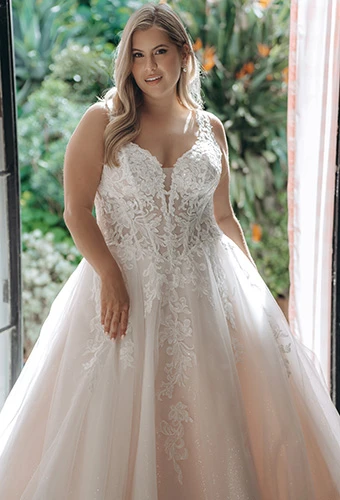
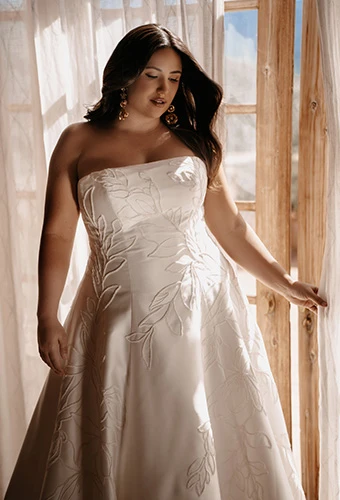
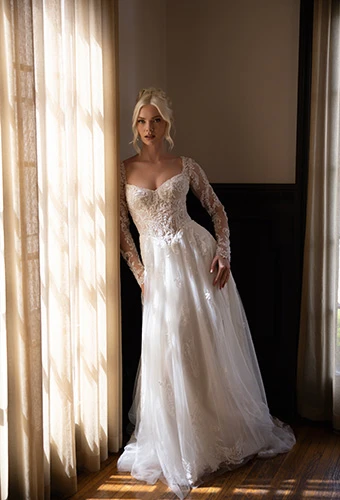
Romantic wedding dresses often feature soft tulle, floral lace, off-the-shoulder necklines and delicate embellishment. A-lines and ballgowns naturally support this style, but romantic details can also soften a fitted silhouette.
Dimensional appliqués may appear to float across a sheer bodice, while layers of tulle create subtle movement through the skirt. Pearl accents, lace-trimmed veils and floral details can continue the mood throughout the bridal look.
Minimalist Wedding Dresses
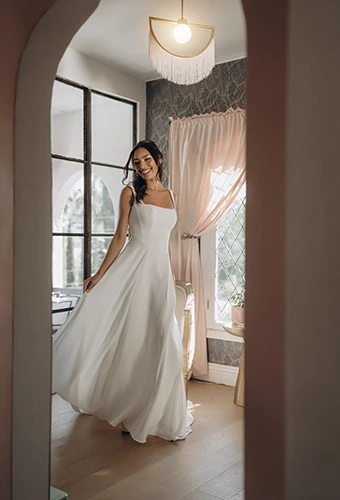
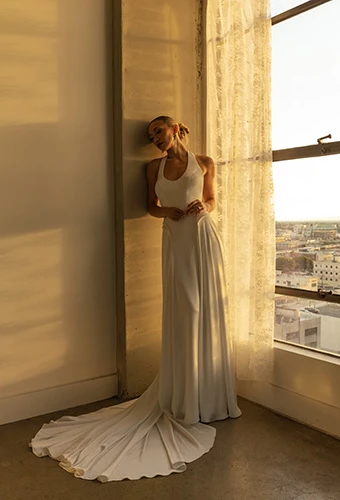
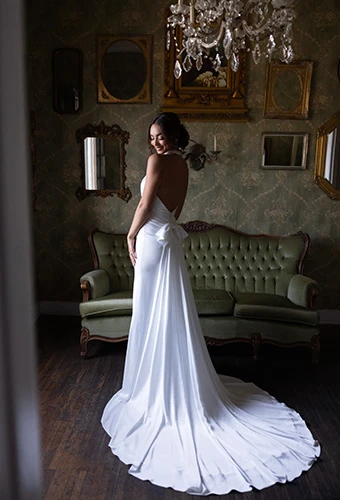
Minimalist bridal style focuses on clean lines, intentional construction and beautiful fabric. Satin columns, crepe sheaths, architectural A-lines and unembellished ballgowns allow draping and tailoring to lead the design.
Minimalist does not have to mean simple. An asymmetric neckline, sculptural bow, dramatic train or precisely placed pleat can create impact without extensive embellishment.
Boho Wedding Dresses
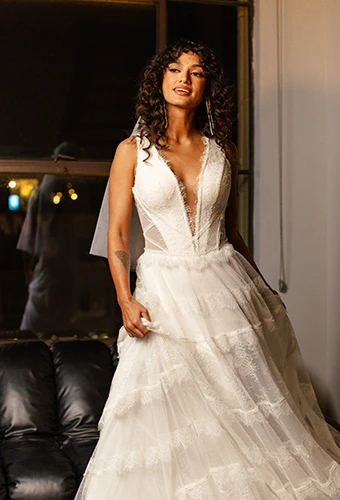
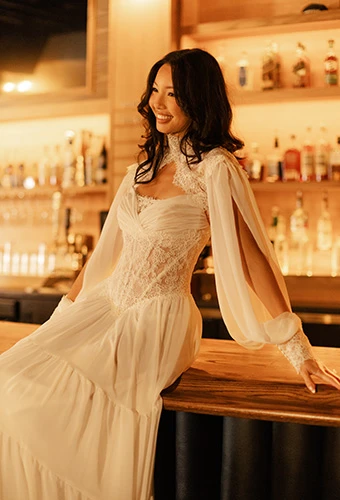
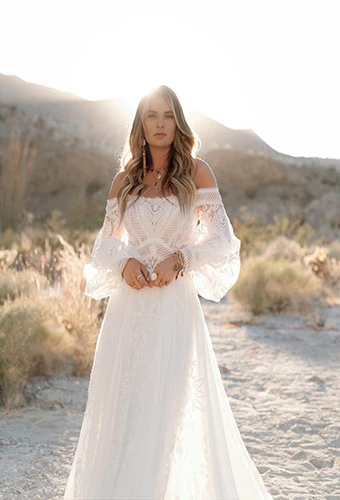
Boho wedding dresses often feature organic lace, flowing chiffon, open backs, relaxed sleeves and unexpected texture. A-lines, sheaths and fit-and-flare gowns work especially well for this expressive aesthetic.
Matte lace, dimensional motifs, fringe and lightweight layers can give the gown a natural sense of movement. The result may feel ethereal, daring or vintage-inspired depending on the details.
Explore boho wedding dresses from All Who Wander to discover free-spirited gowns with distinctive textures, expressive details and effortless movement.
Glamorous Wedding Dresses
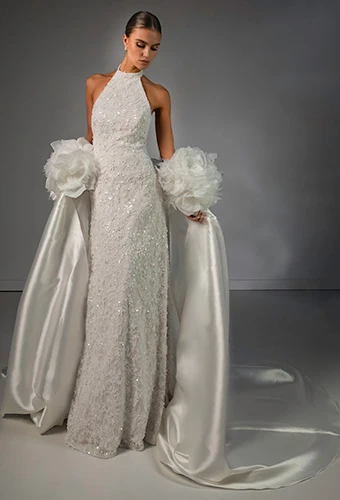
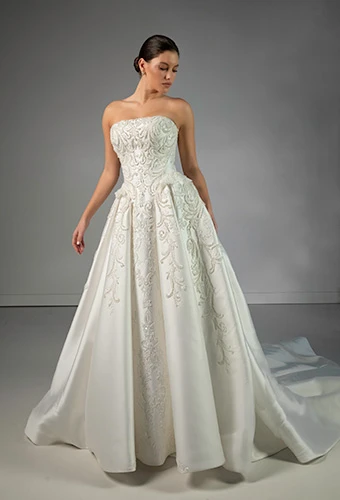
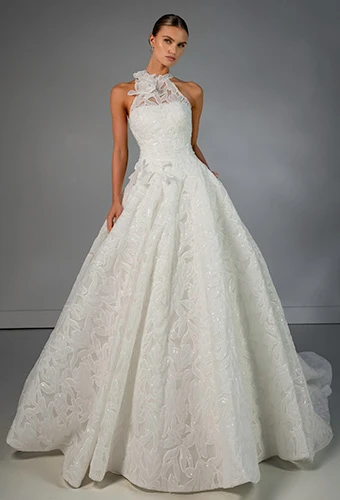
Beading, shimmer, dimensional appliqués and dramatic trains create a radiant bridal look. Mermaid, trumpet, fit-and-flare and full ballgown silhouettes give these details room to make an impression.
Some glamorous gowns create impact through all-over embellishment, while others use sparkle more selectively along a corset bodice, neckline or train.
Explore glamorous wedding dresses from Martina Liana and couture wedding dresses from Martina Liana Luxe to find intricately detailed designs shaped by runway-inspired bridal fashion.
Vintage-Inspired Wedding Dresses
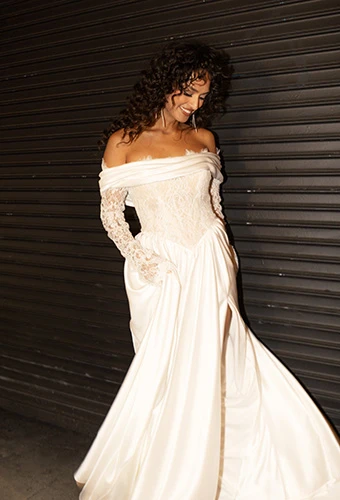
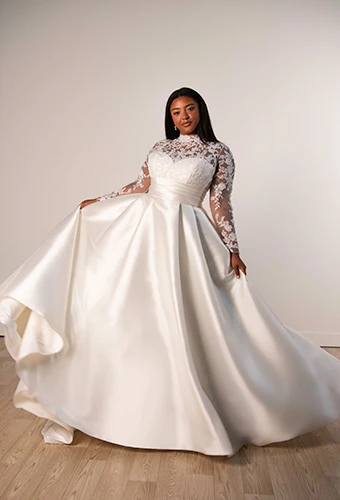
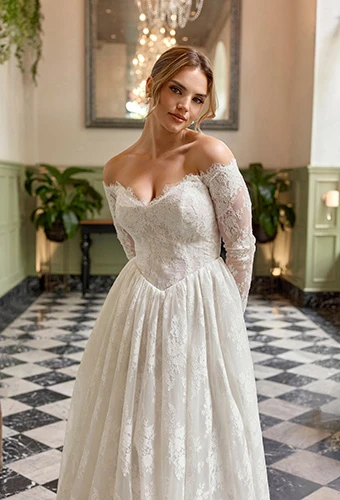
Chantilly lace, corsetry, drop waists, covered buttons and Art Deco-inspired embellishment can connect a gown to another era without making it feel like a costume.
A vintage-inspired gown might feature a softly draped column silhouette, a structured drop-waist ballgown or a lace fit-and-flare with a high neckline. The most compelling designs reinterpret historical designs through a modern bridal perspective.
Silhouette Advice for Different Bridal Priorities
For Petite Brides
Look at the complete proportion of the gown rather than limiting yourself to one silhouette. An uninterrupted vertical line can create an elongated effect but petite brides can also wear ballgowns beautifully when the bodice length and skirt volume are tailored thoughtfully.
Ask your stylist about waist placement, pattern proportions and alteration options.
For Plus-Size Brides
Every silhouette is worth exploring. Focus on the level of support you prefer, how the fabric feels and where seams, waistlines and embellishments sit on the gown.
A-lines and ballgowns can provide structure and volume. Sheaths create a long line. Mermaid, trumpet and fit-and-flare gowns celebrate definition.
Select gowns are available through the EveryBody/EveryBride program up to size 34.
For Boho Brides
Begin with relaxed A-lines, textured sheaths and flowing fit-and-flare gowns. Look for matte lace, organic motifs, fringe, blouson sleeves or lightweight layers that move naturally.
For Brides Who Love Minimalism
Explore column, sheath, clean A-line and sculptural ballgown silhouettes. Matte crepe, satin and Mikado allow the cut of the dress to become the design.
For Brides Prioritizing Comfort
Pay attention to more than the skirt shape. Fabric stretch, internal boning, sleeve mobility, train length and the placement of the flare all affect comfort.
At your bridal appointment, sit down, walk, lift your arms and turn from side to side. Ask how the train will bustle for the reception.
How to Style Each Wedding Dress Silhouette
| Silhouette | Veil | Hairstyle | Accessories |
| A-line | Fingertip or chapel | Loose waves or low bun | Floral pins or delicate jewelry |
| Ballgown or Princess | Cathedral | Polished waves or sleek bun | Drop earrings or an heirloom piece |
| Fit-and-Flare | Fingertip or pearl-edged | Soft bun or ponytail | Pearl or crystal accents |
| Trumpet | Chapel or fingertip | Polished waves or sleek ponytail | Refined statement earrings |
| Mermaid | Chapel or cathedral | Slicked-back style | Statement earrings |
| Sheath or Column | Simple fingertip, birdcage or no veil | Natural texture or sleek bob | Modern earrings |
| Drop Waist | Long, minimal veil | Sculpted updo | Long earrings and minimal necklace |
These pairings are an inspiration starting point, not a set of rules. Styling can reinforce the gown’s aesthetic or create a thoughtful contrast. A cathedral veil can add tradition to a clean dress, while minimalist jewelry can give an embellished gown a more modern finish.
Find a Wedding Dress Silhouette That Reflects You
Wedding dress silhouettes give you a vocabulary for exploring gowns, but they are not rules for what you should wear. The details make the gown personal, and the way you feel in it matters most.
Begin by exploring wedding dress galleries and saving the silhouettes that catch your attention. Then, visit a bridal boutique to experience how different gowns look, move and feel in person.
With an expert bridal stylist by your side, you can move beyond inspiration images and discover a wedding dress that reflects your personality, supports your celebration and lets you step into the day with confidence.
FAQs About Wedding Dress Styles and Silhouettes
A-line wedding dresses are often considered versatile because their gradual skirt shape can be interpreted in structured satin, soft chiffon, lace, tulle and many other fabrics. The best option, however, is the silhouette that supports your preferred look and movement.
Both are fitted through the bodice. An A-line opens gradually from the waist, while a ballgown typically has significantly more skirt volume and a more defined transition at the waist.
Fit-and-flare gowns generally begin to open around the hips or upper thighs. Trumpet gowns remain fitted farther down the body and flare gradually around the mid-thigh. Mermaid gowns typically stay fitted to the knee or below before opening into a more dramatic skirt.
Yes. The scale of the skirt, bodice length and waist placement can all be tailored to create a balanced proportion. Read our top 10 petite wedding dresses guide for more information.
Plus-size brides should explore every silhouette. Consider the support, seam placement, waist position and fabric weight that help you feel most comfortable and confident.