
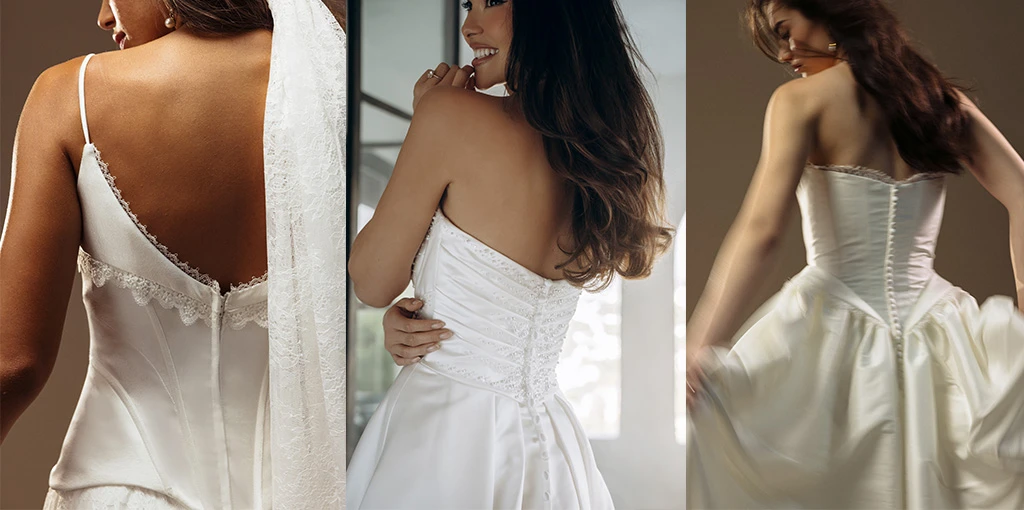
When you imagine your dream wedding dress, it’s often the neckline, silhouette or beautiful details that first come to mind. But what about the back? From delicate rows of buttons to dramatic open-back designs, the back of your wedding gown can be just as breathtaking as the front. Beyond making a beautiful statement as you walk down the aisle, it can also influence how your gown fits, feels and supports you throughout your special day.
Wedding dress back styles come in a variety of designs, each offering its own distinctive look and practical benefits. From romantic lace-up corsets and classic button closures to illusion details and daring low backs, there’s so much to discover. This guide explores popular wedding dress back styles, how to choose one that complements your personal style and comfort preferences and beautiful gowns to consider at your bridal appointment.
Wedding Dress Back Styles at a Glance
Here’s a quick reference to the main wedding dress back styles. Each one has trade-offs between fit, support and look, and we’ll break down every style in more detail below.
| Back Style | What It Is | Best For | Support Level | Visual Effect |
| Corset: Lace-up | Thicker fabric or tulle laced through eyelets over a boned bodice, with a modesty panel and lacing that runs below the waist | Brides who want adjustability | High | Dramatic and romantic |
| Corset: Tie-up | Thin ribbon or tulle ties, often on an open back, that stops at the waist | Open-back looks with a corset-style detail | High | Delicate and romantic |
| Zipper | Hidden zip, often with internal boning | A clean, seamless look | Medium to high | Smooth and minimal |
| Button | Row of fabric-covered buttons, often over a hidden zipper | A classic heirloom feel | Medium | Traditional detail |
| Open Back | Bare back, often to the waist | Statement backs, summer or beach weddings | Needs built in support | Bold and modern |
| Illusion Back | Sheer tulle or lace panel with appliqués | Coverage with a bare-back effect | Medium | Delicate and romantic |
| Keyhole | Small cut-out, usually between the shoulder blades | A subtle reveal | Medium | Understated and feminine |
| Low Back | Back neckline dips to the waist or below | Fashion-forward brides | Needs bodice structure | Elongating |
The key takeaway: If your shape may shift before your wedding day, a corset back offers helpful flexibility. If you want the fastest, sleekest result, a zipper is your best choice, and an inner corset can add corset-style support underneath without changing how the outside looks. Buttons add beautiful architectural detail, but they take more time on the day and more care during alterations.
Which Wedding Dress Back Style Suits Your Body Type?
Every body is different, and no back style is off limits. These pairings are starting points for your bridal appointment, not rules.
| Body Type | Back Style to Try | Silhouette to Pair It With | Styling Tip |
| Hourglass | Corset or low back | Mermaid, fit-and-flare | Pair it with a basque waist to highlight your curves |
| Pear-Shaped | Corset with a structured bodice | A-line, ballgown | Let a detailed back balance a full skirt |
| Apple-Shaped | Keyhole or illusion | A-line, ballgown, fit-and-flare | Choose a back that frames the shoulders and keeps the midsection smooth |
| Tall | Low back, open back or button | Column, mermaid, A-line | Use a long row of buttons or a deep low back to show off your length |
| Petite | Zipper or low back | Sheath, column, A-line | Keep back detail narrow so it doesn’t overwhelm your frame |
| Plus-Size | Corset with wide boning, or open back with built in support | A-line, ballgown, fit-and-flare | Look for lined bodices and wide straps |
Not sure which silhouette suits you? Our guide to wedding dress silhouettes breaks down each shape, and our guide to the best wedding dresses for your body type shows you which styles flatter your shape.
Wedding Dress Back Styles Explained
Corset (Lace-Up or Tie-Up) Back Wedding Dress
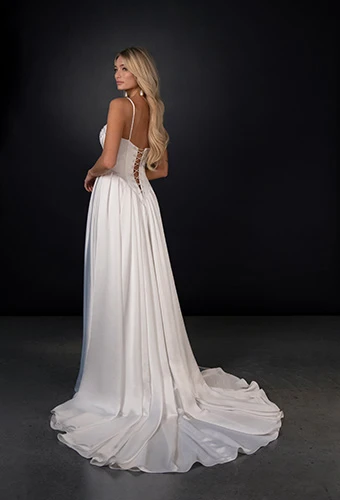
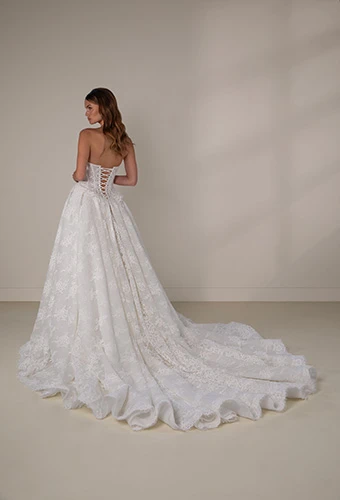
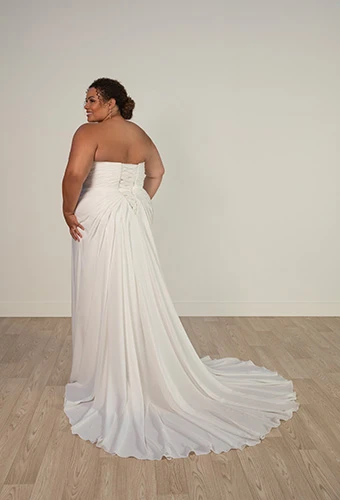
A corset back wedding dress fastens with lacing or ties over a boned bodice. “Boning” is the flexible structure sewn inside that gives the dress shape and support. Because you can tighten or loosen the lacing, it’s the most forgiving closure if your measurements change and many brides love how it can be loosened for dinner and dancing.
Corset backs come in two types:
- Tie-up back: Thin ribbon or tulle ties, often on an open back, and the ties stop at the waist.
- Lace-up back: Thicker fabric or tulle laces through eyelets, and the lacing runs below the waist. Lace-up styles include a modesty panel, a layer of fabric behind the lacing.
Zipper Back Wedding Dress
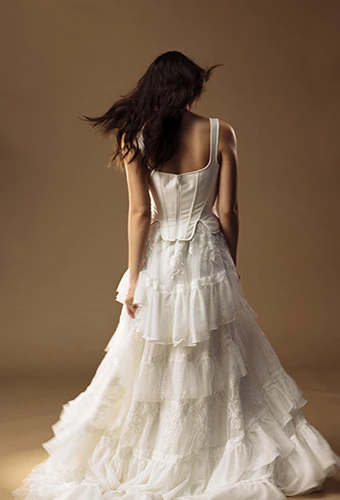
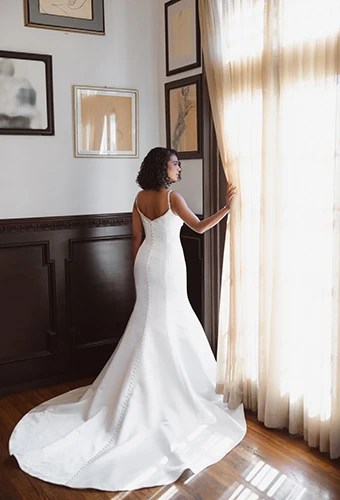
A zipper back wedding dress uses a hidden zip, often with boning built in for support. It’s the fastest closure and gives the smoothest, most minimal line, which is why it’s popular on ball gowns and modern styles.
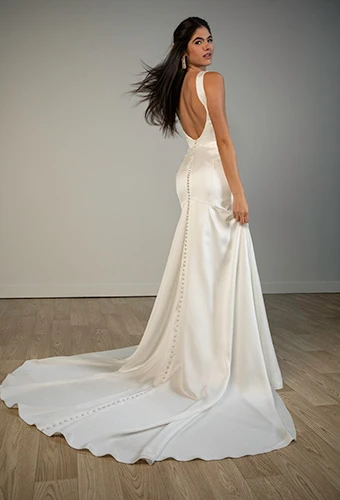
Button Back Wedding Dress
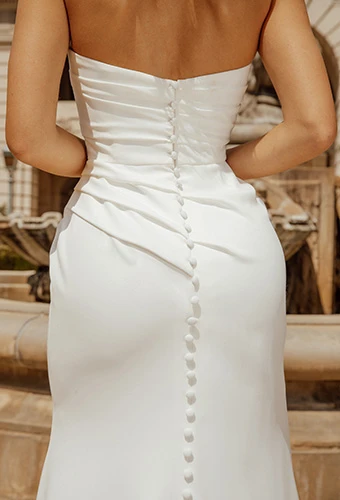
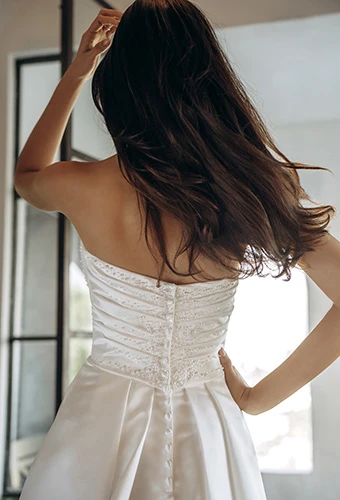
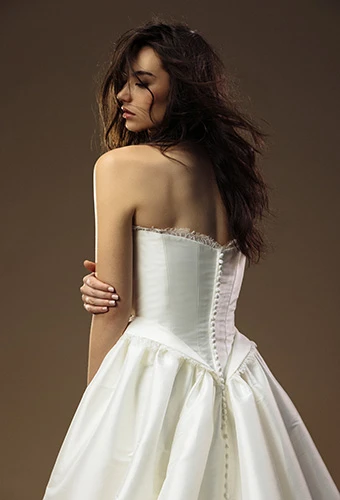
A button back wedding dress features a row of small fabric-covered buttons, usually over a hidden zip so the dress stays secure. It’s a classic, heirloom-style detail that looks beautiful from every angle.
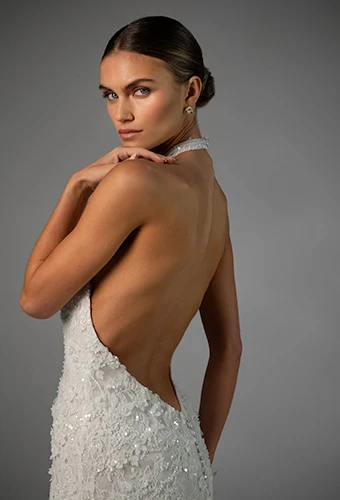
Open Back Wedding Dress
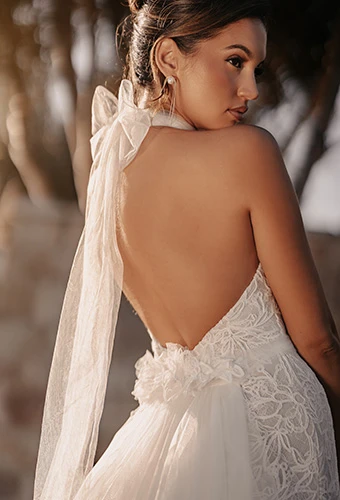
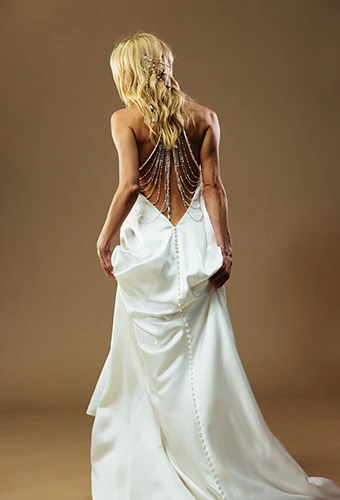
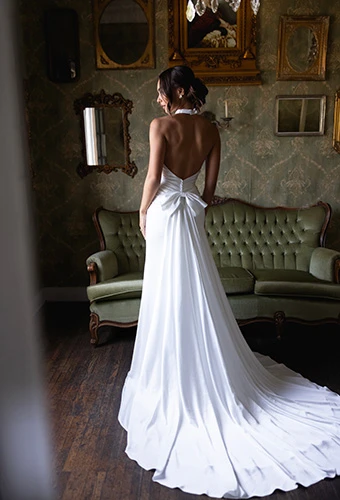
An open back wedding dress is bare, often down to the waist, which makes it a bold, modern choice and a favorite for summer and beach weddings. Because there’s less fabric holding the dress in place, the bodice needs built-in support.
Ask whether the bodice is lined or unlined, and whether bra cups or adhesive cups are recommended. Plan for one to two alterations visits for strap and back-line adjustments.
Illusion Back Wedding Dress
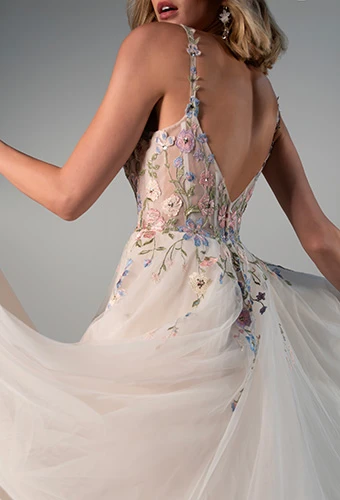
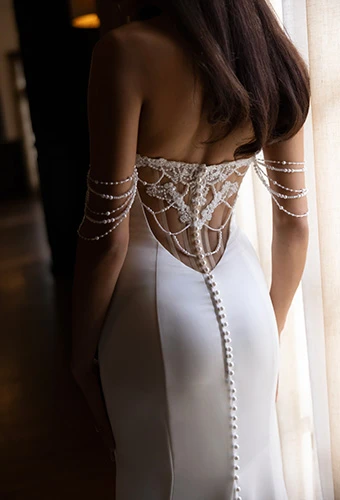
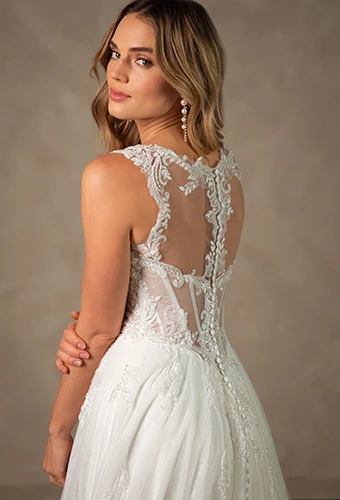
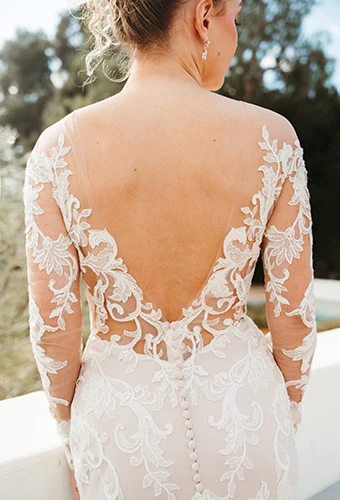
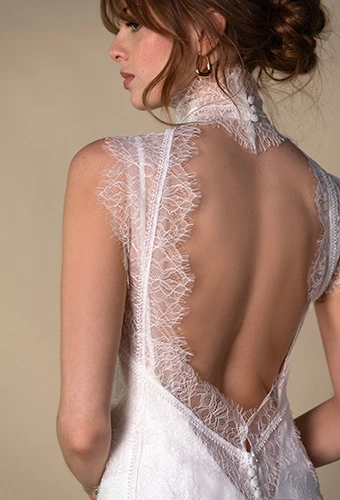
An illusion back wedding dress uses a sheer panel of tulle or lace, often with appliqués or beading, to give you coverage that reads as a bare back. It’s a romantic, delicate option for brides who want a little more coverage.
Keyhole Back Wedding Dress
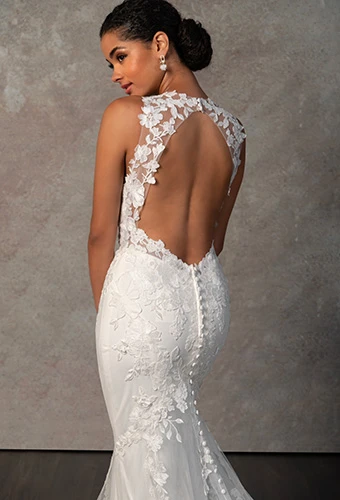
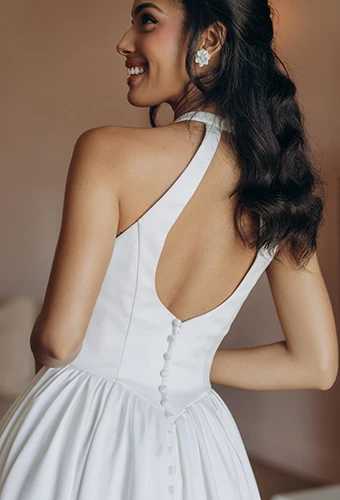
A keyhole back wedding dress has a small cut-out, usually between the shoulder blades. It’s the easiest way to add a reveal without going fully open, and it works with most zipper or button closures.
Torn between a keyhole and a fully open back? See our comparison of keyhole back vs. open back wedding dresses.
Low Back Wedding Dress
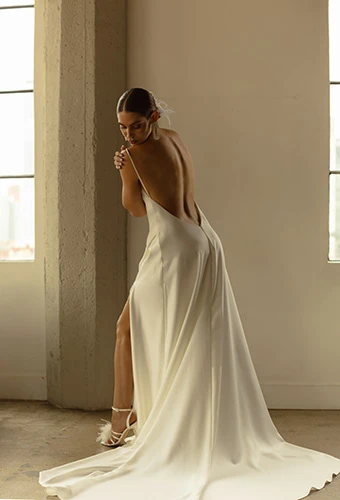
A low back wedding dress dips to the waist or below, creating a sleek, elongating look. The deeper the dip, the more structure the bodice needs to stay in place.
What Is an Inner Corset on a Wedding Dress?
An inner corset is a satin corset panel attached inside the bodice of a wedding dress, at the side seams. When it’s laced, it smooths and cinches your figure from the inside, while the outside of the wedding dress stays unchanged. The result is the snatched, supported feel of a corset with the polished look of the back style you love.
Because it’s hidden, an inner corset can work with different wedding dress back styles, including beneath a clean zipper back. It helps smooth your silhouette, define your waist, create a secure fit and lift and distribute the weight of your bridal gown. It’s especially helpful on fit-and-flare and trumpet wedding dresses and on gowns with dropped waists or low skirt seams, and it’s designed to work across sizes and silhouettes.
How Do You Lace Up a Corset Back Wedding Dress?
Lacing takes a helper and about ten to fifteen minutes. Start at the top, keep the tension even and tighten a little at a time.
- Step into the gown and hold it at your natural waist.
- Start at the top eyelets with both ends of the ribbon equal in length.
- Cross the ribbon through each pair of eyelets, working down the back.
- Tighten the bust area first.
- Cinch the waist.
- Leave the hips slightly looser so you can sit comfortably.
- Tie a flat bow below the waist and tuck the ends in.
Common Mistakes to Avoid
- Lacing too tight. You should be able to fit two fingers beneath the lacing.
- Pulling one side more than the other.
- Rushing the process.
- Skipping a practice run before the wedding day.
Find the Wedding Dress Back Style You’ll Love
The back of your dress is the part you can’t see in the mirror until you’re in the room, and that’s exactly why trying gowns on matters. A photo can’t tell you how a corset back feels when you sit down, how an open back holds up when you hug your loved ones or how a row of buttons looks as you turn to leave the aisle. In the fitting room, you’ll know.
So don’t worry about choosing the “right” back style ahead of time. Come with your favorites and your questions and let your bridal stylist show you a few options side by side. You might fall for a dramatic corset back you never expected or realize a clean zipper back is exactly your style.
Ready to see them in person? Find a retailer near you to book a bridal appointment and try on the different wedding dress back styles from Essense of Australia, Stella York, All Who Wander, Martina Liana and Martina Liana Luxe.
FAQs About Wedding Dress Back Styles and Closures
Yes. Modern corset backs use flexible boning and breathable fabric, and the lacing can be loosened for dinner and dancing. A properly fitted corset feels supportive, not restrictive.
A corset back laces through eyelets and adjusts by an inch or two. A zipper back is fixed, closes in minutes and gives a smoother line, but it needs exact sizing.
Both are corset-style closures. A lace-up back uses thicker fabric or tulle laced through eyelets, includes a modesty panel and laces below the waist. A tie-up back uses thin ribbon or tulle, often appears on open-back gowns and stops at the waist.
It’s a corset panel attached inside the bodice at the side seams. When it’s laced, it smooths and cinches your figure from the inside while the outside of the gown stays unchanged. You get a corset’s supported fit and the look of the back style you love.
Often, yes. A seamstress can replace the zipper with boned panels and eyelets, though not every construction supports the change, so check with your stylist first and allow plenty of time.
Choose a gown with a lined, structured bodice or built-in cups, and use adhesive or backless undergarments. Ask your stylist about alterations to the back line.
Taking in or letting out lacing, adjusting button loops, reshaping a low back line, and adding support to open backs. Plan fittings 8 to 12 weeks out, with your final fitting about two weeks before the wedding.