
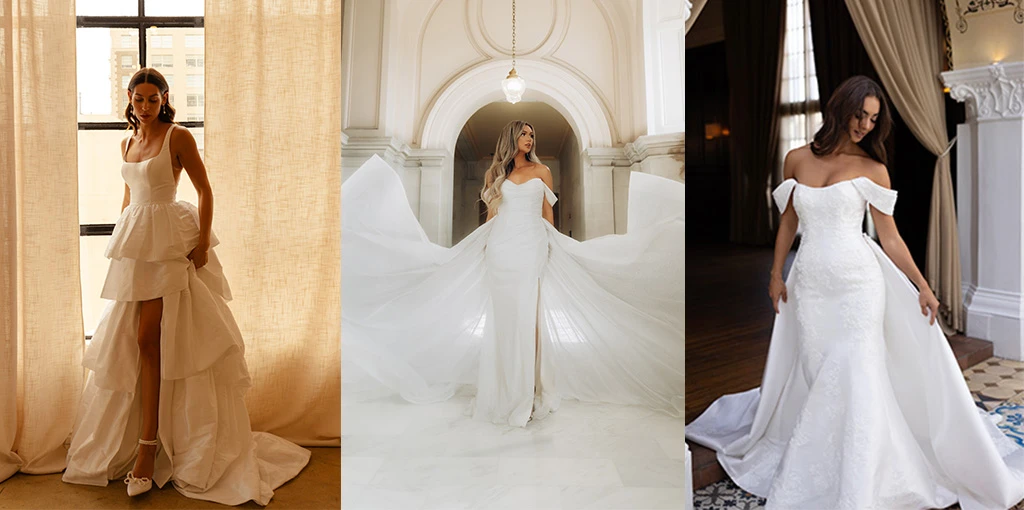
Walk down the aisle in full ballgown drama, then dance the night away in a sleek, easy-moving silhouette, all in one gown. That’s the magic of a detachable overskirt. So how do you style one for the reception? Remove it after your ceremony and portraits to reveal the underdress and create a second look for your reception.
Think of your overskirt as a second outfit you never have to change into. Continue reading to explore ceremony-to-reception looks with gowns from Essense of Australia, Martina Liana, Stella York and All Who Wander, plus the overskirt styles that suit different venues and how to choose one for your body type.
If you’re new to overskirts, start with our ultimate guide to wedding dress overskirts.
How Do You Wear a Detachable Wedding Dress Overskirt?
Think of a convertible wedding dress as two looks in one gown. Most overskirts attach at the natural waist, so the underdress is designed to stand on its own once the outer layer comes off.
A typical flow starts with the full overskirt for the ceremony and formal portraits, followed by its removal for the reception. Some brides make the change before their first dance, while others wait until after the toasts. Talk through the timing with your planner and photographer so the transformation happens when you want it to, not when the music is already playing.
Look 1: The Full Overskirt for the Wedding Ceremony
The ceremony is your moment for maximum volume. Pair the full overskirt with a veil that echoes the gown. A cathedral-length veil suits a dramatic ballgown overskirt, while a softer, simpler veil lets a heavily embellished overskirt take center stage. Keep your hair swept up or half up so the neckline and back details show, and choose jewelry that suits the bodice. A statement earring works beautifully with a strapless neckline. Practice walking, turning and sitting in the full overskirt before the wedding, especially on stairs, so the train follows you naturally.
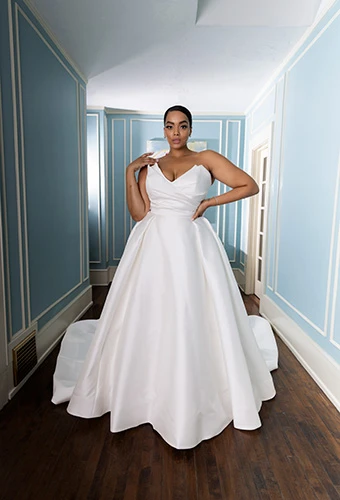
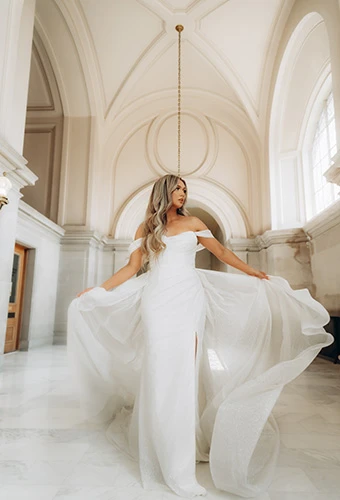
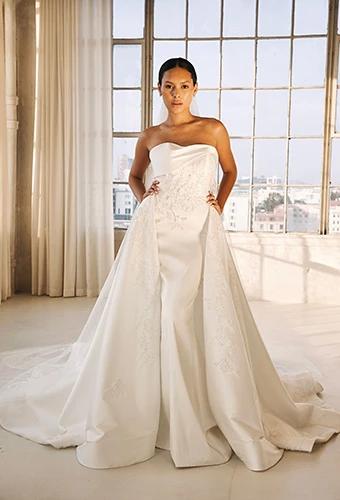
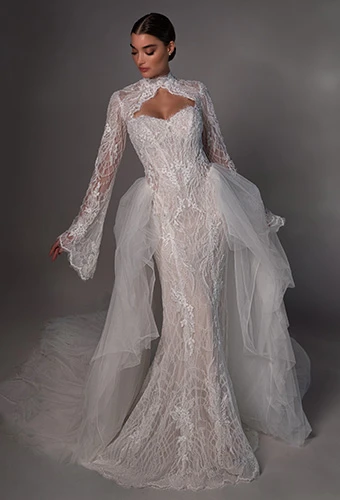
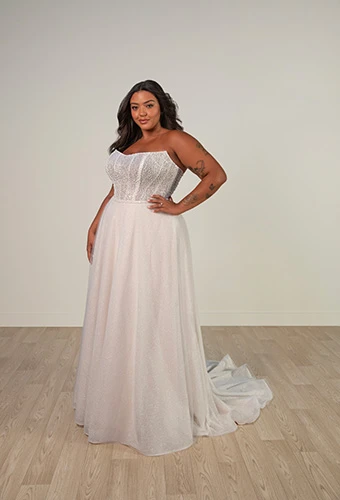
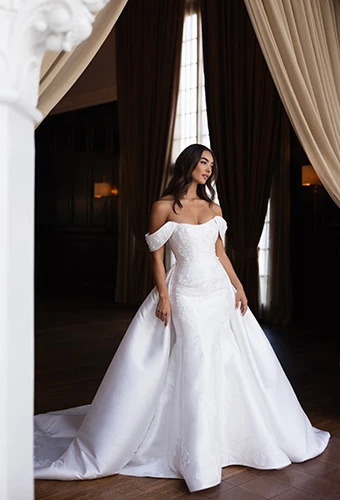
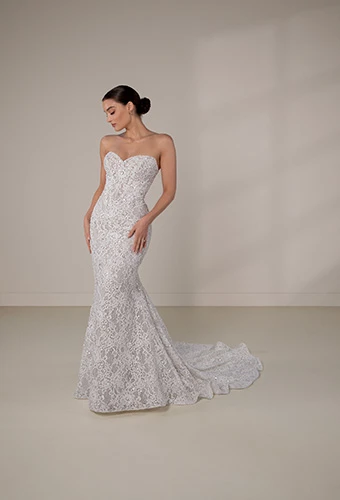
Look 2: The Overskirt Removed for Dancing
When the music starts, take the overskirt off. Removal usually takes just a few minutes, so line it up before you step onto the dance floor and have your helper ready. A fitted underdress or a short hem means you can twirl, dip and dance all night, and the reveal is a moment guests remember. This is also the time to swap your accessories for movement and to consider a lower heel if you plan to be on your feet.
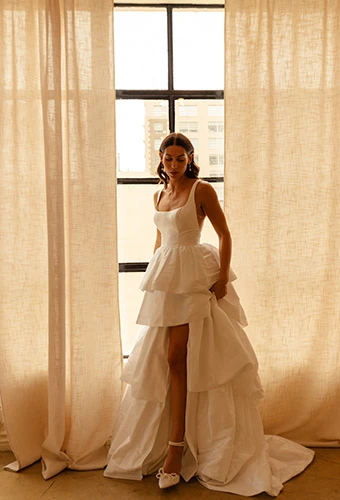
Real Bride Spotlight: How Olivia Styled Her Overskirt
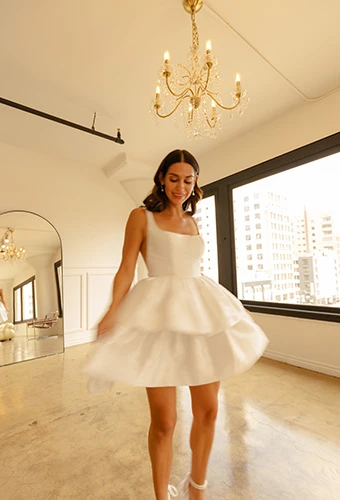
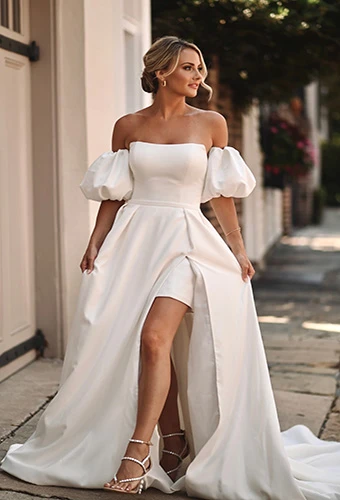
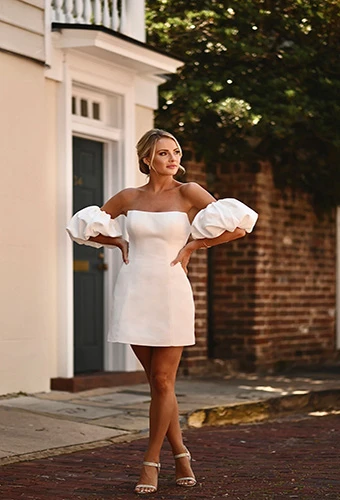
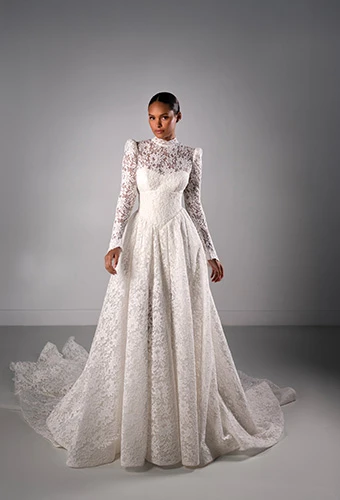
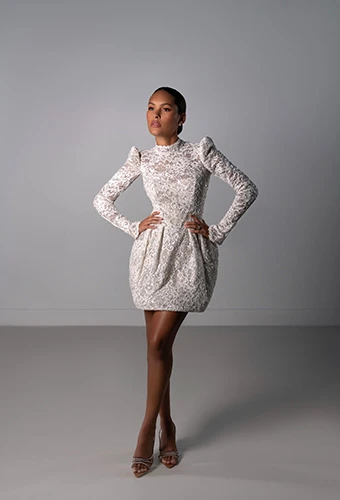
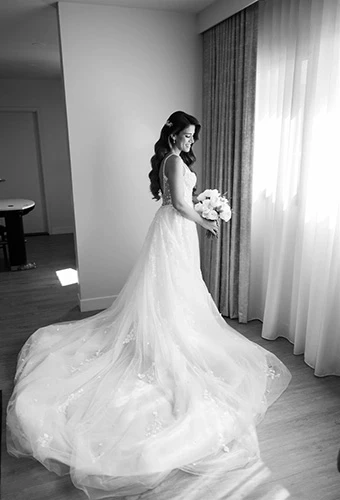
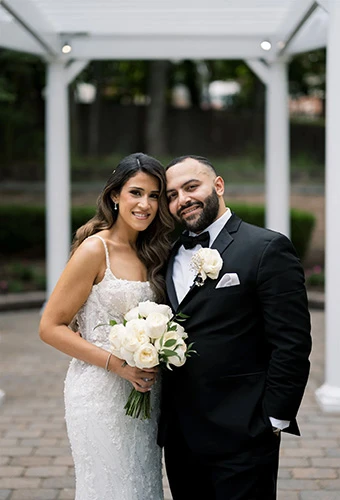
Real Martina Liana bride Olivia was torn between a princess ballgown and something more fitted, so she didn’t have to choose. She tried an overskirt over Martina Liana 1510 and fell in love. She wore it for the drama, then took it off at the reception: “I could remove the overskirt during my reception for more mobility to dance.” The result was a glamorous, sparkly look that never felt over the top, set against a timeless black-and-white wedding. Olivia called the energy and love on the dance floor the most memorable moment of her day.
If you’re stuck between ballgown drama and a sleek fitted silhouette, her look shows how an overskirt over a fitted gown lets you have both. Read her full story in Real Martina Liana Bride Olivia & Raphael.
How Do You Change Your Accessories Between Looks?
Your accessories should evolve with your overskirt. A few simple swaps make each look feel intentional, not like a dress with a layer removed.
| Accessory | Ceremony | Cocktail Hour | Reception |
| Veil | Cathedral or chapel length to echo the overskirt | Remove it to simplify the silhouette | Off, so nothing gets in the way of dancing |
| Hair | Elegant updo or half-up that shows the neckline | Keep the same style | Pinned up or secured for movement |
| Jewelry | Statement earrings or a necklace suited to the neckline | Add or swap earrings for a fresh finish | Bold earrings or a hair accessory that catches the light |
| Shoes | Heels you can walk the aisle in | Keep the same pair | A lower heel or comfortable flats for the dance floor |
What Overskirt Styles Work for Different Wedding Venues?
Your wedding venue can be a wonderful source of inspiration when choosing an overskirt, but there are no rules. Whether you’re dreaming of dramatic volume, delicate lace or something unexpected, the most important thing is choosing a look you love. Here are a few ideas to inspire you.
Garden weddings are a beautiful setting for tulle or organza overskirts adorned with floral lace appliqués. These lightweight fabrics move gracefully in the breeze and complement the natural surroundings. For outdoor celebrations, consider a hemline that’s easy to manage on grass or gravel and breathable fabrics for warmer weather.
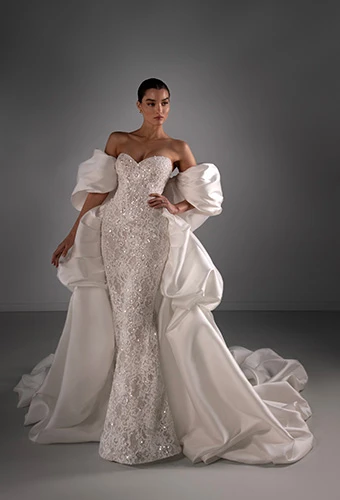
Ballroom weddings offer the opportunity to embrace dramatic volume. A full ballgown overskirt in structured tulle or satin can create a striking entrance, while a cathedral-length train adds an extra touch of grandeur. Martina Liana Luxe LE1436 pairs a fit-and-flare gown in duchess silk satin, pearl Mikado and scrolling lace appliqués with a detachable overskirt. Essense of Australia D4300 is a strapless satin jacquard column dress with a draped sweetheart neckline, and its detachable pleated overskirt adds dramatic movement. If you’re planning to dance the night away, either one lets you transition into a sleeker silhouette for the reception.
Beach weddings can be especially beautiful with lightweight, sheer overskirts that catch the ocean breeze. Tulle and other airy fabrics create lovely movement, while shorter trains may be easier to manage on the sand. Explore some of the romantic, airy designs within the Essense of Australia collection, like Essense of Australia D4133.
Barn weddings provide a charming backdrop for everything from romantic lace to dramatic satin. A soft tulle overskirt can complement the rustic setting, while a structured silhouette creates a beautiful contrast. If your celebration includes outdoor spaces or uneven flooring, consider how easily you can move in your chosen style.
Ultimately, your venue is just one part of your wedding vision. Whether your style complements the setting or makes a statement all its own, the right overskirt is the one that makes you feel incredible.
How Do You Choose a Wedding Dress Overskirt for Your Body Type?
Every body works with an overskirt, because you choose where the volume begins and how much of it you want. Use these as starting points, then try on a few silhouettes at your bridal appointment.
| If you want… | Consider |
| To highlight a defined waist (hourglass) | A fitted underdress with a ballgown or A-line overskirt that starts at the natural waist |
| Softer volume through the hips (pear) | A lightweight tulle overskirt that falls softly, or a structured one if you want more shape |
| A smooth line through the midsection (apple) | A bodice with corsetry or structure, with the overskirt gathering below the waist |
| More curves or shape (rectangle or athletic) | A voluminous or layered overskirt over a sculpted bodice |
| A longer-looking frame (petite) | A modified, not oversized, overskirt in a lightweight fabric, with proportions tailored to your height |
| Room for dramatic volume (tall) | A full ballgown overskirt or a cathedral-length train |
| Extended sizing (plus-size) | Styles built with a supportive underdress so the outer layer adds volume without carrying the structure |
A well-made underdress never depends on the overskirt for support, so you stay comfortable whether it’s on or off.
At your fitting, check that the waist attachment sits comfortably when you sit, walk and dance, and ask about the overskirt’s length. Some designers, including Martina Liana, offer custom services for altering an overskirt’s length, shape and even design, and overskirt fabrics can often be mixed and matched with the underdress for a one-of-a-kind look.
How Should You Photograph Each Overskirt Look?
The change is a gift for your photographer, so plan for it. Share the timeline in advance and ask for these moments:
- The aisle: The full overskirt in motion, with a wide shot of the train and a close-up of the waist and bodice details.
- Golden hour: Portraits in the full overskirt, followed by photos of the gown without it to capture both silhouettes.
- The reveal: The moment the overskirt comes off, often a favorite guest and editorial shot.
- The dance floor: The underdress in motion, from the first dance to the last song.
How to Plan Your Overskirt Look Before Your Wedding Day
- Fittings: Ask your stylist whether the underdress and overskirt need separate hemming or bustling.
- Attachment: Overskirts typically fasten at the waist with hidden closures. Ask exactly how yours attaches and releases.
- Try both looks: Try on the underdress alone as well as with the overskirt, and love both.
- A designated helper: Have a friend or family member practice the removal so it happens quickly.
- Storage: Choose a safe spot in the venue for the removed overskirt, away from food and crowds.
- Timeline: Tell your planner and photographer exactly when each change happens.
- Weather plan: Wind, rain and heat can change which look works best, so have a backup.
Find Your Two-in-One Bridal Look
From the first step down the aisle to the last song of the night, a detachable overskirt lets one gown carry you through every moment of your wedding day. Wear it full for the vows and formal portraits, then remove it when it’s time to dance. Ready to find yours? Browse our full collection of overskirt wedding dresses to see every style from Essense of Australia, Martina Liana, Stella York and All Who Wander.
Your wedding day has more than one moment, and your gown can meet every one of them. Find a retailer near you and book an appointment to discover your dream overskirt wedding dress.
FAQs About Styling a Detachable Overskirt
Remove it after the ceremony and portraits so the underdress is ready for the reception. Consider swapping your veil for statement jewelry to complete the second look.
Most overskirts come off in just a few minutes. Practice with your helper beforehand so the change feels effortless.
Yes. Many brides wear the overskirt for the ceremony and portraits, then remove it for the reception. Ask your stylist how the overskirt attaches and practice removing it before the wedding.
Most silhouettes work, and fitted styles like sheath and fit-and-flare are the most common choices for a dramatic ceremony-to-reception change. Your stylist can help you match the overskirt’s fabric and volume to your gown.
It’s up to you! If you like, swap the veil for earrings or a hair accessory and consider more comfortable shoes. The underdress is designed to stand on its own.
It depends on the gown. Overskirts with chapel-length trains generally don’t hang past the underdress, while longer ones may need bustling, so your stylist will confirm.
Your wedding venue can be a wonderful source of inspiration when choosing an overskirt, but there are no rules. A light tulle or organza overskirt often suits gardens and beaches, while lace or sturdy tulle in a shorter length can work well for a barn.